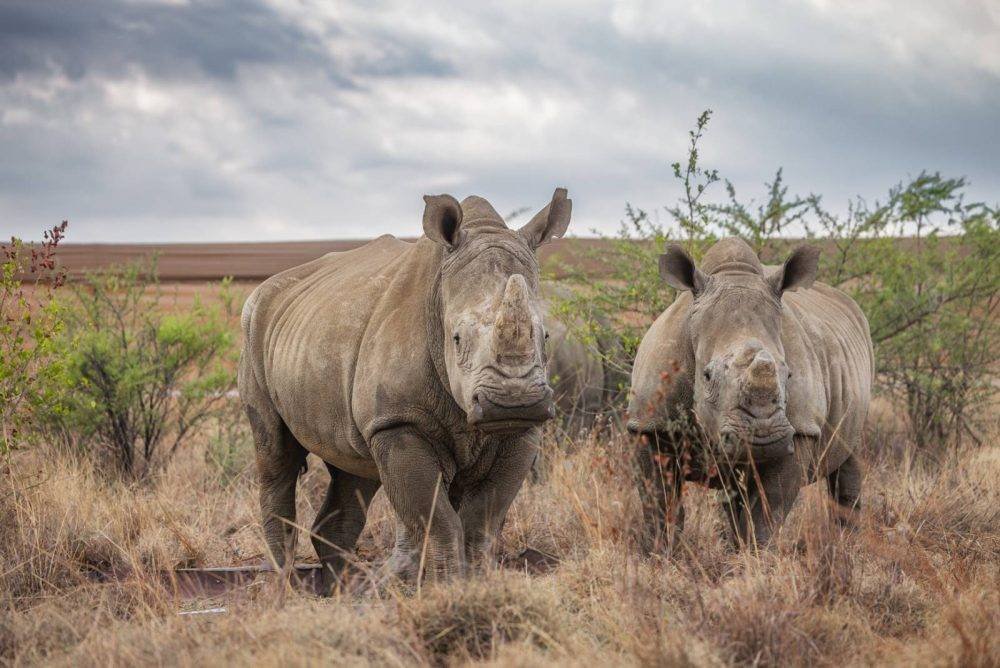
The Minister of Forestry, Fisheries and the Environment,Willie Aucamp, has unveiled a new national plan to safeguard South Africa’s rhinos, positioningconservationas both an ecological and economic project and signalling a shift toward broader public and private participation in protecting the species. Published in theGovernment Gazettethis week, the revised Black and White RhinoBiodiversity Management Plan(BMP) consolidates more than a decade of policy into a single framework, aimed at strengthening coordination and confronting the persistent threat of poaching. “The Black and White Rhino BMP provides a holistic strategic framework and detailed action plan to strengthen rhino conservation in South Africa,” Aucamp said, adding that it would place efforts “on a renewed and more coordinated course”.
South Africa remains central to global rhino conservation, home to most of the continent’s remaining populations. The country haspreviously brought the southern white rhino back from the brink of extinction— from fewer than 50 animals in the early 1900s to tens of thousands at its peak — and now holds a significant share of Africa’s black rhino population. Today, it is estimated to hold roughly two-thirds of the continent’s rhinos, making its policy choices globally consequential.
Butpoaching, driven by transnational criminal syndicates supplying demand in Asian markets for traditional medicine and luxury goods, continues to threaten both species. “Increased demand for rhino horn, which is the driver behind the increased rhino poaching, remains a concern,” the BMP said. “Illegal trade in rhino horn is understood to be driven by crime syndicates operating nationally and internationally, to supply horn for traditional medicine and craft markets in consumer countries mostly in Asia.
Read Full Article on Mail & Guardian
[paywall]
“Most of the losses of rhinos to poaching have been experienced in large state-managed protected areas such as Kruger National Park and Hluhluwe-iMfolozi Park, but all areas with rhinos have faced increased poaching pressure since the early years of the 21st century.” Security costs have surged more than five-fold since 2008, placing strain on both public conservation budgets and private reserves, and underscoring the limits of a protection-only approach. At the same time, smaller, fragmented populations and ongoing habitat pressures are emerging as longer-term risks to the species’ survival. “At the end of 2022, 32% of black rhino and 61% of white rhino in South Africa were privately or community owned with a trend of increasing private and community ownership over the past two decades,” it said.
Against this backdrop, the new plan marks a shift in thinking: conservation alone is no longer seen as sufficient. Instead, the BMP frames rhinos as both ecological assets and economic drivers, emphasising that their long-term survival depends on broader societal value.
[/paywall]
All Zim News – Bringing you the latest news and updates.
