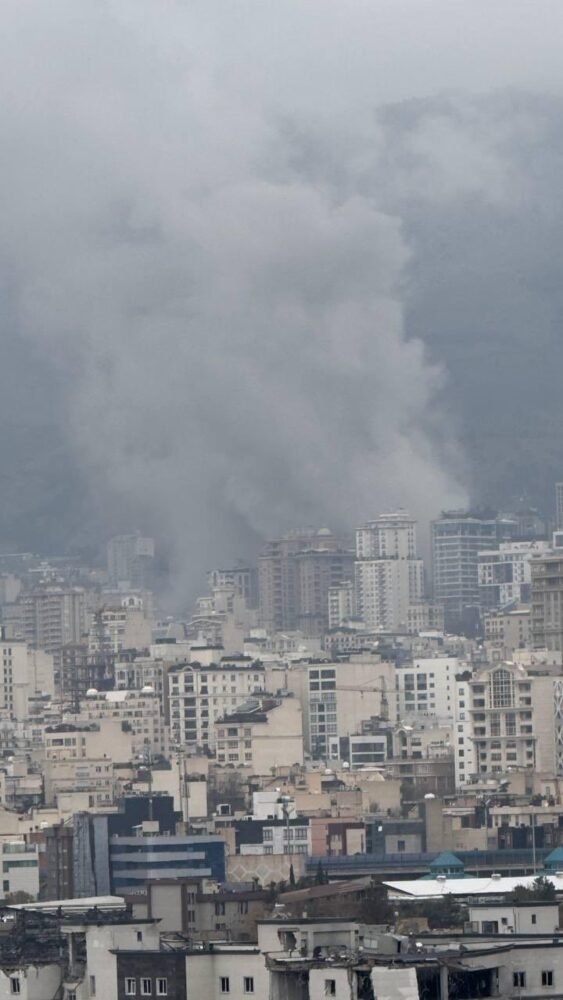
Wars rarely unfold only on the battlefield. They reshape political dynamics within societies, often in ways that are neither intended nor immediately visible. Recent developments in Iran once again highlight one of the most consistent, yet frequently misunderstood, effects: external pressure tends to consolidate internal political systems rather than weaken them.
Prior to the latest escalation, Iran’s domestic environment reflected a familiar pattern: underlying economic pressure, generational dissatisfaction and a gradual erosion of confidence in political institutions. Public sentiment was not uniformly oppositional but it was increasingly fragmented and, in parts, critical of the status quo. In such contexts, change—whether gradual or abrupt—often appears possible over time.
External military pressure, however, alters this trajectory. Airstrikes, targeted attacks on leadership figures and the broader framing of regime change shift the political frame of reference. Internal grievances do not disappear but they are temporarily subordinated to a more immediate concern: external threat.
Read Full Article on Mail & Guardian
[paywall]
The result is not necessarily renewed ideological support for the governing system but rather a form of defensive consolidation. This distinction is important. The shift is not from opposition to endorsement but from internal contestation to prioritisation of sovereignty and stability.
In such conditions, even dissatisfied constituencies may temporarily align against perceived external pressure, further narrowing the space for internal political change. Citizens who may have been critical of the state can become less willing to see that state weakened under external pressure. This is a familiar pattern.
External intervention reframes political identity from internal contestation to collective defence. It compresses political space and narrows the range of acceptable positions, at least in the short term. In doing so, it often delays or disrupts the very internal changes that external actors claim to support.
Importantly, this effect is not unique to Iran nor is it limited to military intervention. The same underlying mechanism can be observed in a range of political contexts where external influence intersects with domestic dynamics. A related, though less kinetic, example can be found in Somaliland.
Efforts to secure international recognition have long been central to its political strategy. Yet external engagement in such contexts does not simply validate internal legitimacy; it can also reshape internal political competition and perceptions of authority. External recognition or the prospect thereof, can consolidate certain actors while marginalising others, altering domestic political equilibria in ways that are not always anticipated.
The broader principle remains consistent: external involvement, even when well-intentioned, interacts with internal political structures in complex ways. It can stabilise, distort or delay internal processes rather than accelerate them. This dynamic is also relevant in the South African context.
In recent years, elements within South Africa’s political and civil society landscape have increasingly sought to internationalise domestic political concerns. This has taken various forms, including engagement with foreign governments, appeals to international institutions and alignment with external political narratives. The intention behind such actions may vary but they are often premised on the assumption that external pressure can influence domestic outcomes.
The difficulty is that such strategies can, at times, produce counterproductive effects. This is particularly true in politically sensitive environments where historical narratives of external interference remain salient. In such contexts, even limited or symbolic external alignment can be interpreted as an extension of foreign influence, reshaping domestic political perceptions in ways that strengthen rather than weaken existing power structures.
[/paywall]
All Zim News – Bringing you the latest news and updates.
