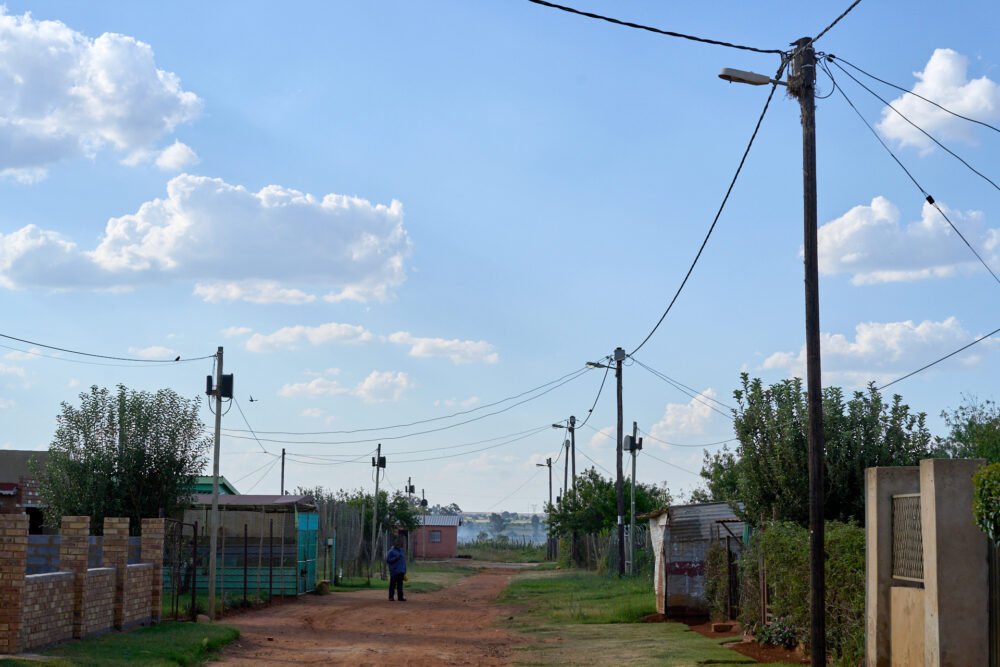
In Merafong local municipality on Gauteng’s West Rand, households are connected to the national grid butcannot afford electricity, revealing how prepaid power, municipal debt and gaps in oversight are pushing residents into energy poverty. Power lines run overhead, electricity meters are fixed to homes and official records list households as electrified. Yet inside many homes Oxpeckers recently observed, the lights were off.
For a growing number of residents, the question is no longer whether electricity is available but whether it is affordable enough to use. Across Carletonville andKhutsong, households described long periods without power after their free basic electricity allocations and prepaid electricity units ran out. Homes remain physically connected to the grid but electricity use becomes sporadic or disappears entirely – a phenomenon researchers describe as “self-disconnection”.
For some households, rising costs and prepaid metering systems have effectively turned municipal electricity into a backup source used only when money allows, rather than a reliable primary source of energy. This energy crisis is unfolding in a municipality facing deep financial distress. According toEskom, the Merafong local municipality owes R1.82 billion in electricity-related debt accumulated since 2015.
Read Full Article on Mail & Guardian
[paywall]
Eskom said municipalities are responsible for billing and revenue collection within their licensed supply areas, including prepaid metering systems. When municipalities fail to pay Eskom for bulk electricity supply, the consequences extend beyond municipal finances. Municipalities also play a critical role in shaping how and whether, households transition away from grid electricity, through decisions on tariffs, prepaid systems, indigent support and the approval or restriction of alternative energy options such as rooftop solar.
“Non-payment by municipalities places significant strain on the electricity value chain and ultimately affects Eskom’s ability to invest in infrastructure, maintain networks and ensure reliable supply,” Eskom said. “Eskom acknowledges the concern of residents who meet their payment obligations but are affected by municipal non-payment. Municipalities remain responsible for billing and revenue collection from customers within their licensed areas, including prepaid environments.”
[/paywall]
All Zim News – Bringing you the latest news and updates.
