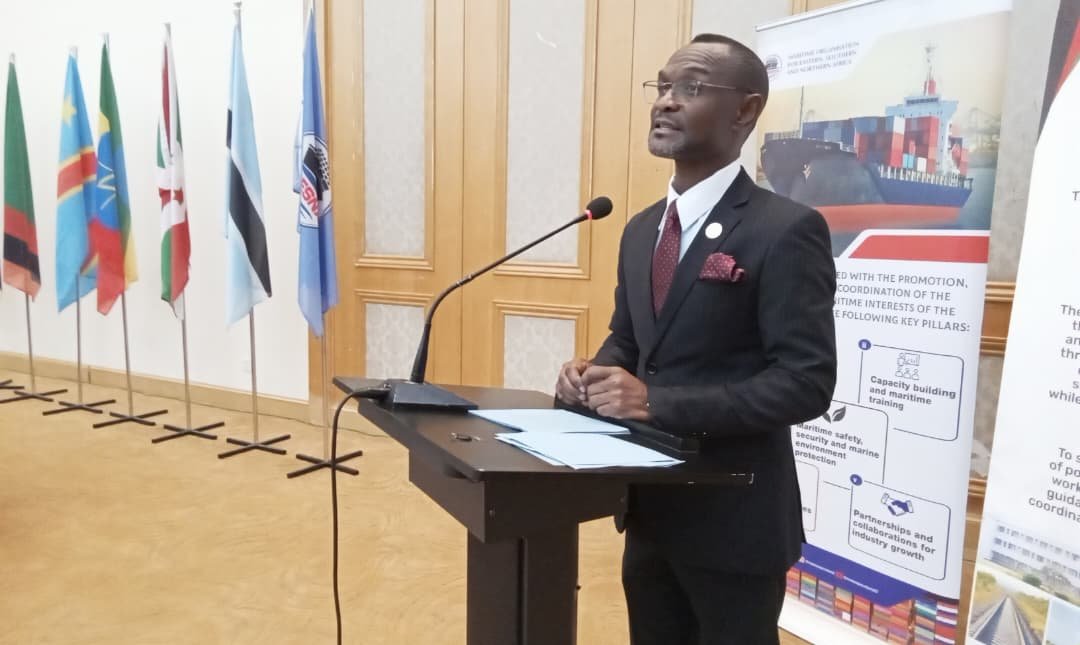
The Maritime Organisation for Eastern, Southern and Northern Africa (MOESNA) has urged Malawi to urgently deepen cooperation with regional partners or risk remaining structurally sidelined from the global shipping industry that carries the bulk of world trade. Malawi has now formally joined MOESNA, but the country—like many others in Africa—remains severely disadvantaged within the global maritime transport system. This imbalance has major economic consequences on a continent where more than 90 percent of international trade moves by sea.
For land-linked countries such as Malawi, the situation is even more challenging. Mpaata said Malawi’s heavy dependence on foreign ports and international shipping lines leaves the country exposed to high transport costs, fragile supply chains, and limited influence over the terms of global trade. “These challenges are even more pronounced for land-linked countries such as Malawi,” said Mpaata.
“They highlight the urgent need for regional cooperation, policy harmonisation and collective engagement with international shipping markets if we are to improve connectivity and competitiveness.” He warned that Africa’s cargo continues to be dominated by multinational shipping companies, a situation that drains foreign exchange from the continent while leaving individual African states with little say in the global maritime system. “Multinational carriers dominate the carriage of African cargo, resulting in significant foreign exchange outflows and limited policy influence by individual states. These challenges cannot be solved through isolated national responses—they require coordinated regional action,” Mpaata said.
Read Full Article on Nyasa Times
[paywall]
He added that Malawi’s decision to join MOESNA and prioritise maritime issues signals a recognition that participation in modern shipping and logistics systems is critical for economic growth and resilience. “Strengthening participation in maritime transport and logistics systems is essential for enhancing trade competitiveness and economic resilience,” he said. Minister of Local Government and Rural Development Ben Phiri echoed the concerns, acknowledging that Malawi’s economic future is closely tied to efficient logistics systems and stronger regional transport partnerships.
Phiri said Malawi’s participation in the regional maritime framework is aimed at strengthening logistics systems, improving access to international shipping routes, and reducing the high cost of doing business. “By participating in this regional framework, Malawi seeks to strengthen logistics systems, enhance access to maritime trade routes, secure support for capacity building, ensure reliable connectivity to global markets, and reduce the cost of doing business,” Phiri said. He stressed that for Malawi—a land-linked economy—access to seaports alone is not enough. Efficient and coordinated inland transport corridors are equally critical if the country is to reduce trade costs and improve its competitiveness in global markets.
[/paywall]
All Zim News – Bringing you the latest news and updates.
