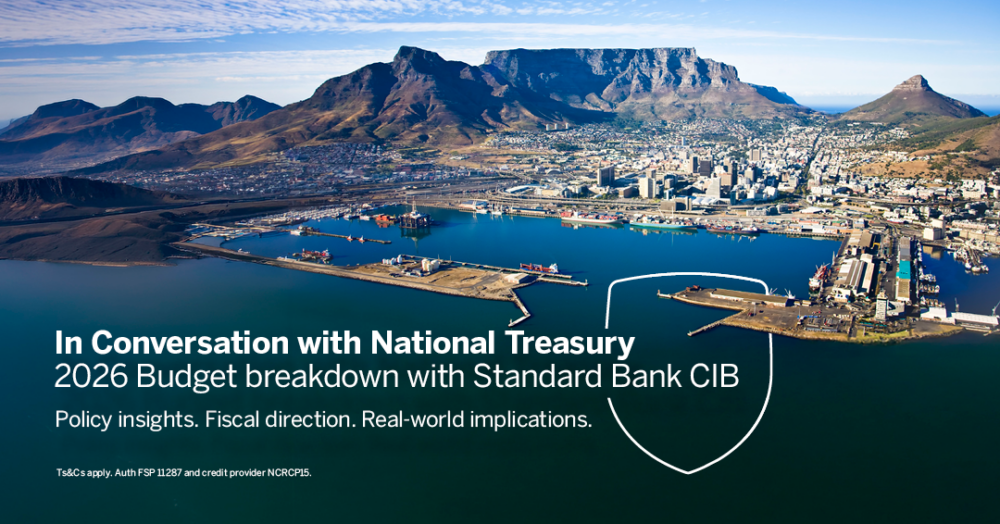
Fiscal discipline, reform momentum and the role of private capital South Africa’s 2026 Budget arrives at a moment defined by both volatility and cautious optimism. National Treasury has projected that the country’s debt to GDP ratio has reached its peak. A primary surplus has been restored and fiscal consolidation has held despite multiple external shocks that have tested the resilience of the global economy.
Yet stabilisation, as Finance Minister Enoch Godongwana emphasised at Standard Bank’s post Budget engagement with Treasury in Rosebank, is not an end point. It is a platform. “Macroeconomic stability on its own is a necessary but insufficient condition,” he told business leaders gathered for the discussion.
That distinction matters. For more than a decade, South Africa’s fiscal conversation has been dominated by deterioration. Rising debt ratios, escalating debt service costs and constrained growth steadily narrowed the space for policy action.
Read Full Article on Mail & Guardian
[paywall]
The focus became defensive, centred on containing risk rather than enabling expansion. The present moment signals a shift. Debt stabilisation creates breathing room within the fiscal framework.
But what follows will determine whether that space translates into durable economic growth. Godongwana’s emphasis on four interdependent pillars offers a framework for the next phase of the economic agenda. Macroeconomic stability, structural reform, improved state capability and accelerated infrastructure delivery together define the direction of travel.
From a banking perspective, the logic of that framework is clear. Stability reduces risk premia and lowers borrowing costs. Structural reform improves competitiveness and unlocks constrained sectors of the economy.
Institutional capability strengthens execution and policy credibility. Infrastructure investment expands productive capacity and raises long term growth potential. Sim Tshabalala, chief executive of Standard Bank Group, acknowledged the progress that has been made while urging continued momentum on regulatory reform.
“This is a familiar playbook,” he said, referring to regulatory impact analysis and the reduction of unnecessary red tape. “But it is still one worth following.” The reform programme under way through Operation Vulindlela and related initiatives is therefore not abstract. It has begun to reshape several areas of economic activity.
[/paywall]
All Zim News – Bringing you the latest news and updates.
