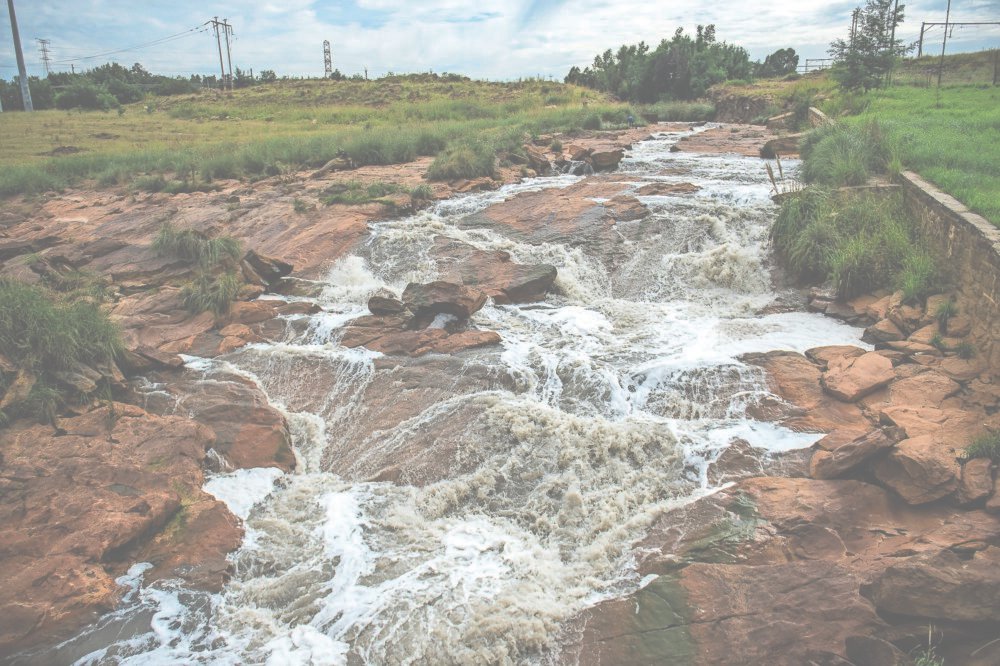
TheKlip Riveris carrying Johannesburg’s pollution burden, with new research revealing how failing infrastructure,wastewater contaminationand degraded wetlands are steadily eroding the health of one of the city’s most important river systems. The Klip River Water Quality Monitoring Research and Development Report, conducted by theProcess Energy and Environmental Technology Station(UJ Peets) at the University of Johannesburg, found contamination is not confined to a few hotspots. Instead, it reflects long-term ecological stress driven by urban expansion, ageing sanitation systems and the loss of the river’s natural ability to regulate pollution.
Rising on Johannesburg’s southern edge, the Klip River flows through Soweto, Lenasia and the broader Midvaal area before joining the Vaal River, passing industrial zones, agricultural land, wetlands, protected areas and densely populated settlements. DrKyle van Heyde, a water scientist and environmental researcher formerly with UJ Peets and now with the Agricultural Research Council, said the research was designed to understand water quality across the catchment, identifying key pollution pathways and supporting more targeted and effective interventions. “Water quality allows us to move beyond assumptions and into evidence,” he said at a recent webinar on saving the river through science, collaboration and solutions.
“By analysing chemical indicators, microbial communities and spatial patterns, we can identify pollution sources, understand how contaminants move through the system and assess risks to ecosystems and people. Importantly, this allows us to move from reactive responses to proactive informed management.” In combining water chemistry, microbial sequencing and geospatial analysis across nine sites, the researchers produced one of the clearest recent pictures of how the river system is functioning and where it is failing. Historically, the Klip River’s extensive peat-rich wetlands acted as natural buffers, trapping sediment, absorbing nutrients and filtering pollutants.
Read Full Article on Mail & Guardian
[paywall]
But many have been degraded, fragmented or built over, weakening the river’s resilience. What emerges from the research is not a picture of occasional contamination but of a system under sustained pressure. Wastewater leaks, stormwater runoff, ageing sanitation infrastructure, urban sprawl, disturbed land and legacy mining impacts interact across the catchment.
“The Klip River is one of the most important freshwater systems in the Upper Vaal catchment,” said van Heyde. “Historically, wetlands played a central role in maintaining water quality, acting as natural filters and buffers. What we are seeing now is what happens when that buffering capacity is reduced.”
[/paywall]
All Zim News – Bringing you the latest news and updates.
