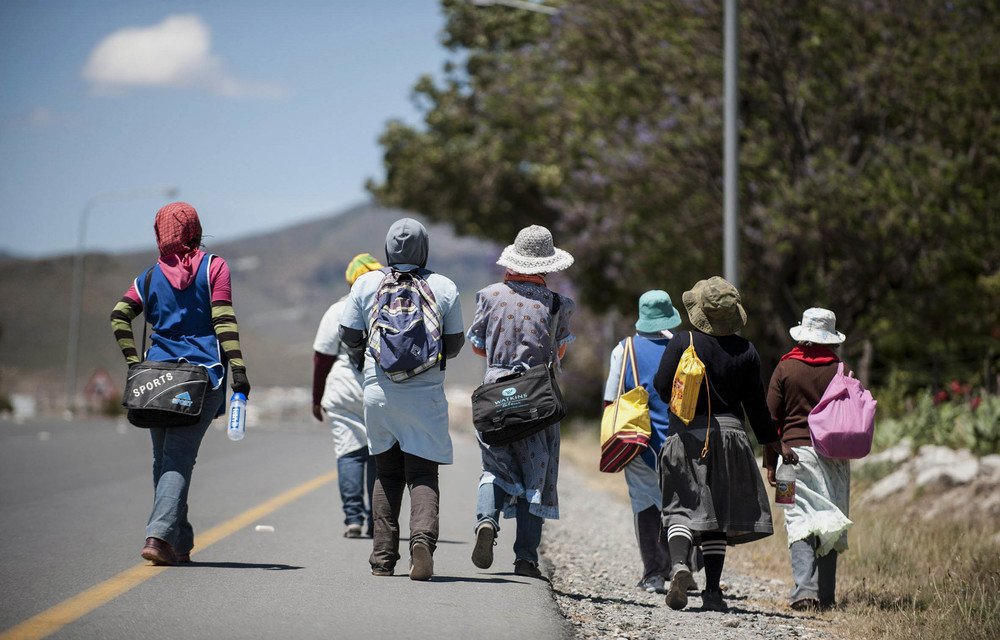
For rural communities in South Africa,climate changeis not an abstract concept but a daily reality. This was made clear by Her Majesty Queen Neo Mopeli, a newly appointed commissioner of thePresidential Climate Commission(PCC), at a recent event it hosted. “The just transition is about people,” Mopeli said, speaking from the perspective of rural and traditional communities.
She said South Africa’sshift toward a low-carbon, climate-resilient economymust not reproduce past inequalities but instead build a more inclusive and equitable future. Across the country, economic shifts, particularly in the energy system, had left local industries without adequate support, information or agency, she said. Women were disproportionately affected by climate impacts and economic exclusion and young people continued to face alarmingly high unemployment.
“For many of our communities, particularly those in rural and traditional communities, climate change is not a distant or abstract concept. It is a lived experience daily through persistent water scarcity, declining agricultural productivity, food insecurity, loss of livelihoods and income opportunities that are simply not there.” The queen was one ofseveral new commissionersspeaking at the PCC’s media breakfast, held before the commissioner’s strategic session for 2026 to 2030 and the 21st quarterly commission. The session brought together the full cohort of newly appointed commissioners under theClimate Change Act.
Read Full Article on Mail & Guardian
[paywall]
The discussions made one thing unmistakably clear: South Africa’s just transition is entering a more accountable and action-oriented phase and the pressure to deliver is no longer abstract. The panel was led by PCC deputy chair Dipak Patel, who drew on insights from the PCC’s five-year legacy and review report to frame the conversation. Patel outlined the objectives of the 2026 to 2030 strategic plan, clarified the commission’s advisory mandate under the Climate Change Act and reflected on the country’s just transition agenda.
He said the commissioners, who were drawn from diverse sectors, brought quantitative, scientific and socioeconomic perspectives to the PCC: a breadth of expertise essential for navigating the complexity of the transition ahead. Reflecting on the leadership of previous deputy chairs Valli Moosa and Dr Crispin Oliver, Patel said South Africa’s Just Transition Framework, adopted by the cabinet, remained a beacon for ensuring no one was left behind. “The justices mentioned in the Just Transition Framework deal with restorative, procedural and distributional justice and those remain key tenets of any choices we make with respect to how to pursue that transition,” he said.
Yet, translating that framework into reality has not been without friction. Over the years, South Africa’s just transition plan has faced criticism from climate activists and communities near coal-fired plants, as well as other marginalised groups, who have described progress as little more than a “ticking time bomb”.
[/paywall]
All Zim News – Bringing you the latest news and updates.
