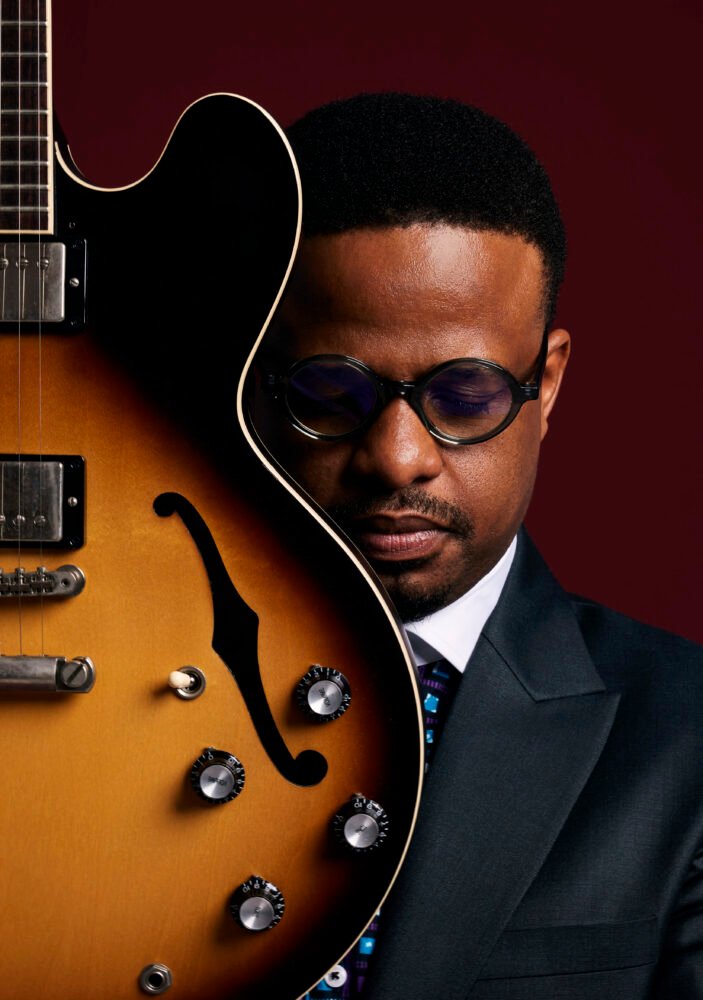
Billy Monama saysThe Rebirth of Ubuntuis about memory. The concert he founded and curates is now preparing for its fifth edition at the Joburg Theatre on May 29 and 30. Over two nights, a line-up that includes Lira, Zoë Modiga and Vusi Nova will perform alongside a 20-piece orchestra in a production that Monama describes as researched, structured and intentional.
But the idea behind the concert began with a sense that something had shifted in the role music plays in society. “I grew up in a society where I saw musicians being role models, being the mouthpiece of the society,” Monama says. “The songs they wrote advanced society.
They gave hope to the people of South Africa.” That memory of music as a form of public language continues to shape how he thinks about his work. It’s also what prompted him to ask a question that has since become the foundation ofThe Rebirth of Ubuntu. The answer, in his view, is not flattering.
Read Full Article on Mail & Guardian
[paywall]
He speaks about a culture that has shifted toward spectacle, toward the performance of success and excess. Concerts become spaces where the memory that lingers is more about the lifestyle around it than the music. “When you ask people how the concert was, the only thing they remember is the champagne,” he says.
The Rebirth of Ubuntuis designed as a counter to that. Monama speaks about it in almost ceremonial terms. He compares it to a form of collective gathering, something closer to a thanksgiving than a night out.
“The youth of 1976, they gave their lives for us to be here,” he says. “The women of 1955, they gave their lives for us. So we cannot take those significant events lightly.” This year’s theme, “50 Years of Youth Legacy”, anchors the concert in that history, providing a structure that informs the entire production.
Monama describes the show as moving through time, beginning with early composers and building toward the present. Archival imagery, drawn from photographers like Sam Nzima and Peter Magubane, is integrated into the performance. Songs are contextualised, placed within a broader narrative of resistance, expression and identity.
[/paywall]
All Zim News – Bringing you the latest news and updates.
