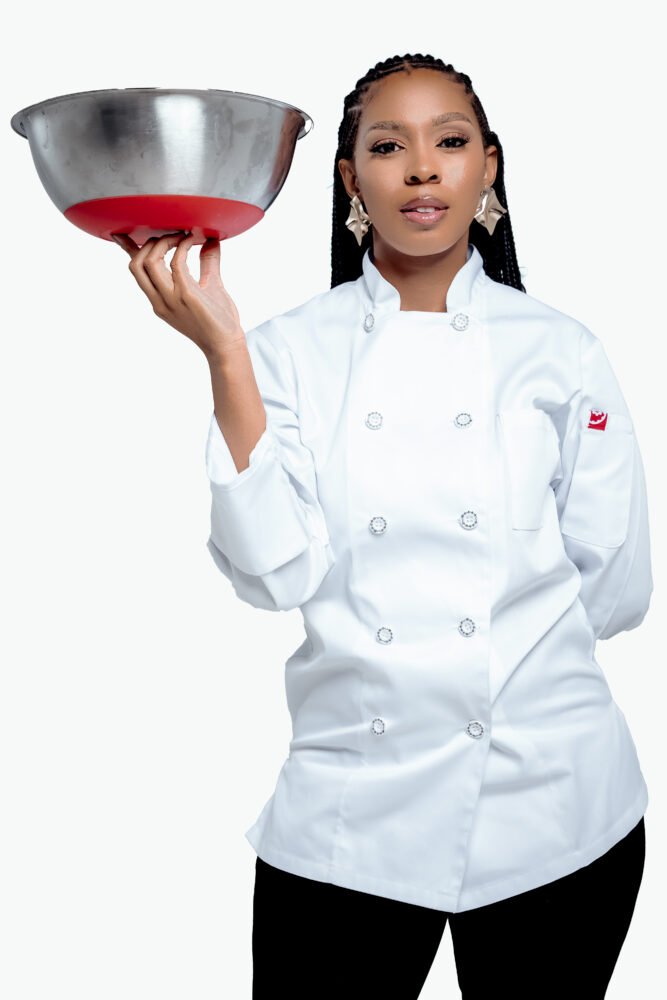
For Mmule Setati, the founder ofFeed My Tribe, food has never been just about what sits on a plate. It is a language that moves between memory, emotion, culture and care. What she has built is not simply a culinary platform but a way for people to return to themselves through the act of eating.
At its core,Feed My Tribeis not about recipes. It is about relationships to the body, to memory, to others. Setati did not begin her career in the kitchen.
She studied PR and communications, moving through corporate spaces with the clarity of someone who had mapped out her future in conventional terms. Food existed alongside this life but never as its centre. It showed up in the margins: in the clients she worked with, in the juice business she later built and scaled.
Read Full Article on Mail & Guardian
[paywall]
And in the quiet act of cooking for friends. I’m going to be on the Forbes list as an executive. What I would be doing exactly, I had no clue but I knew that’s where I was going to end up.
Food was never it,” she says. “But when I look back now, the one thread that has always been there in my life is food. Even when I didn’t choose it, it kept choosing me in different ways.” Out of that return cameFeed My Tribe.Initially it was a simple platform, a place to archive recipes and share meals with friends and followers.
It was not built with scale in mind but with intimacy. A way of saying: this is what I’m cooking tonight; this is how you can do it too. “When I started, it was just my friends asking me for recipes after they’d come over,” Setati says.
“People would say: ‘Please send me that thing you made’ and I thought let me just create a platform where I can put everything. So whenever I cook at night for my family, I post it there. It was never a business at first.
It was just passion.” Then the world changed. Lockdown confined people to their homes and suddenly, food was no longer optional. It became central to survival.
“People have a very strange relationship with food,” Setati says. “We assume everyone loves cooking but they don’t. A lot of people don’t like it or they don’t know where to start.
And during Covid, everyone was forced into the kitchen. You had executives living alone who had never cooked before. You had couples stuck together trying to figure out how to connect again. You had women who had just gotten married and suddenly had to cook every day.”
[/paywall]
All Zim News – Bringing you the latest news and updates.
