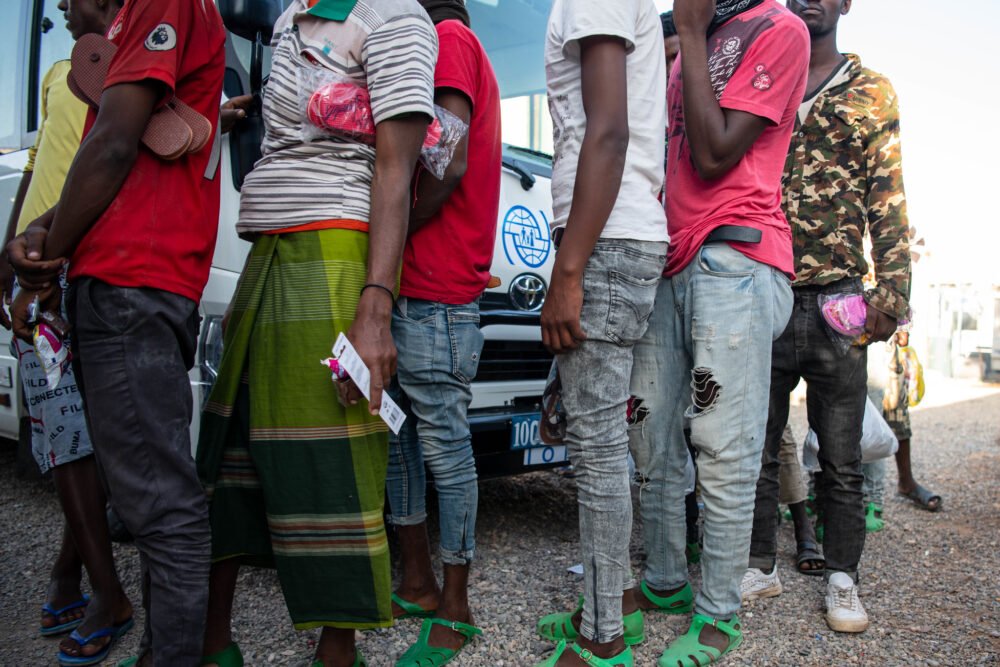
South Africa’s democratic project rests on a paradox increasingly difficult to ignore, a constitutional order premised on universal dignity coexisting with material conditions that erode it daily. In the widening gap between principle and lived reality, xenophobia has re-emerged not merely as a social pathology but as a political language, one that seeks to explain scarcity, insecurity and institutional decay through the figure of the foreigner. Recent months have seen an escalation in rhetoric and action directed at black African migrants and with growing frequency, at South Asian communities, particularly those of Pakistani and Bangladeshi origin.
What distinguishes the moment is not only the breadth of the targets but the normalisation of extra-legal enforcement. Politicians and quasi-civic formations have begun to arrogate to themselves functions that belong to the state: policing, adjudication and sanction. This is not an assertion of sovereignty, it is evidence of its fragmentation.
The analytical error underpinning much of the discourse is the substitution of proximate visibility for causality. Migrants, by virtue of their presence in informal economies and urban peripheries, become legible symbols of competition and disorder. Yet they are not the origin of South Africa’s structural malaise.
Read Full Article on Mail & Guardian
[paywall]
The deeper determinants are in the form of an economy that has failed to generate labour-absorbing growth, entrenched spatial inequality and a state apparatus compromised by incompetence, inefficiency and at times, corruption. To acknowledge this, however, does not require the romanticisation of migration. It is both empirically and politically untenable to deny that transnational criminal networks operate within South Africa’s borders, engaging in activities ranging from drug dealing to human trafficking.
The phenomena are not unique to any nationality nor a reducible to migration per se, they are features of globalised illicit economies that exploit weak regulatory environments. Where the South African state has been inconsistent, incompetent or ineffective, such networks have found opportunity. Here the distinction is crucial.
Criminality is a function of enforcement failure, not ethnic identity. To collapse the two is to abandon both reason and justice. Collective attribution, whether directed at Nigerians, Zimbabweans or any other group, does not enhance security, it corrodes the legitimacy of the law.
If xenophobia is, in part, a misdiagnosis; it is also a symptom. It reflects a crisis of state capacity and more fundamentally, of state presence. Borders that are porous, immigration systems that are opaque and backlogged and policing that is unevenly applied create conditions in which legality becomes ambiguous.
In such an environment, both citizens and migrants operate in a grey zone, one that invites opportunism, breeds mistrust and ultimately incentivises vigilantism. Equally significant is the question of social integration. Certain migrant communities, particularly those organised around tight religious or commercial networks, have developed forms of economic resilience that are both adaptive and insular.
While such formations are neither inherently problematic nor unique to migrants, their relative opacity to state oversight can generate legitimate concerns about regulatory compliance and long-term cohesion. A capable state does not seek to homogenise differences but must ensure that all communities are embedded within a shared legal and civic framework. The imperative, then, is not merely to condemn xenophobia, though that is necessary but to render it politically obsolete by addressing its underlying conditions.
[/paywall]
All Zim News – Bringing you the latest news and updates.
