A Pan African Sanctuary Alliance analysis flags chacma baboons as the most frequently recorded primate in legal international trade. The numbers sit inside a wider, continent-spanning market that reaches from trophy exports to the illegal trafficking of great apes. South Africa is accustomed to measuring wildlife crime in rhino horn and abalone, and to debating trophy hunting through the familiar lens of big cats and elephants.
Baboons rarely feature in those conversations. They are more often framed as “problem animals” along the urban edge, in farming districts and along tourist routes. Yeta reportby the alliance suggests chacma baboons deserve a very different kind of attention: in the legal international trade data the report analysed, the chacma baboon (Papio ursinus) is the single most frequently recorded primate taxon, with 2,031 CITES trade incidents – far more than any other primate listed in the report’s top rankings.
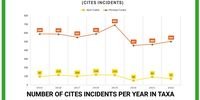
The Pan African Sanctuary Alliance’s analysis is continental in scope. It examines CITES trade records with a focus on 2015-2023 and identifies 5,286 trade incidents across 78 primate taxa, with 702 involving Appendix I species and 4,603 involving Appendix II species. In that wider picture, chacma baboons – endemic to southern Africa – stand out because they completely dominate the list.
Read Full Article on Daily Maverick
[paywall]
The report’s species breakdown makes the contrast stark. After chacma baboons, the next most frequently recorded taxa are far lower: yellow baboon (Papio cynocephalus) appears with 511 incidents, chimpanzees (Pan troglodytes) with 418, and olive baboons (Papio anubis) with 393. A species that shows up that consistently is, at minimum, a reliable indicator of how supply chains, permitting practices and overseas demand are interacting over time.
The Pan African Sanctuary Alliance pairs trade rankings with conservation status, and here the chacma baboon illustrates a broader risk. In the report’s table linking frequently traded species to the International Union for Conservation of Nature – as well as the SA National Biodiversity Institute – Red List categories, chacma baboons are listed as “Least Concern”. That label can act like a cultural sedative.
It encourages the idea that trade volume is inherently low stakes and can reduce pressure for rigorous oversight. Yet high-volume trade can still be consequential at local scales, particularly when it coincides with habitat loss, lethal control linked to conflict, and weak verification systems around how animals are sourced and moved. The Pan African Sanctuary Alliance report does not isolate a chacma-baboon-only breakdown of trade purposes and products.
Those analyses are presented at broader levels, often distinguishing between monkeys (including baboons) and great apes rather than drilling down to one species. Even so, the categories the report identifies matter for understanding why baboon exports should be examined closely. The Pan African Sanctuary Alliance finds that the dominant declared purpose in legal primate trade incidents is “hunting trophy”, with more than 2,000 incidents. It also records product types commonly including trophies, specimens, skulls and live animals, and notes that the majority of individuals in international trade are recorded as taken from the wild, with more than 4,000 incidents involving wild-sourced specimens.
[/paywall]
