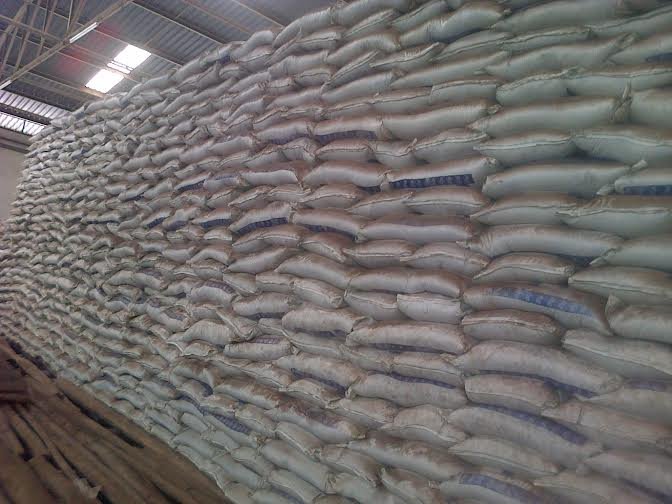
The deepening fertiliser crisis has once again exposed Malawi’s chronic failure to plan for food security, as scarcity worsens and opportunistic vendors openly exploit desperate farmers—selling fertiliser at exorbitant prices right outside authorised agro-dealer shops. Nation on Sunday spot-checks yesterday found vendors selling fertiliser at K3 800 per kilogramme—translating to a shocking K190 000 per 50kg bag, far above the official prices ranging between K155 000 and K166 000. Once again, ordinary Malawians are paying the price for government indecision, delayed payments and policy paralysis—raising the troubling question: how long will this fertiliser crisis be allowed to persist year after year?
At one of the largest fertiliser distribution points in Limbe, Blantyre, desperation was written on farmers’ faces as stocks ran dry. “I came to buy fertilisers only to be told that it is out of stock,” said Alfred Banda. “I planned to apply the first fertilisers this weekend.” Pressed on whether he would turn to vendors, Banda shook his head.
“I budgeted for the official price. “It is either you buy or not—these are our prices,” said one trader who admitted that they stockpiled fertiliser in anticipation of shortages. “We were told that foreign currency problems would cause scarcity, so we bought earlier and kept it,” the vendor said.
Read Full Article on Nyasa Times
[paywall]
“If there was no scarcity, we would have sold at the same price as agro-dealers.” For some farmers, however, hunger leaves no room for choice. Samantha Mkangama, whom we met at the same shop, was forced to buy two bags at the inflated vendor price. “I could not miss applying fertiliser this weekend.
I also could not risk waiting for the official supply,” she said. Behind the spiralling prices lies a deeper systemic failure. Importers say outstanding government arrears and shrinking credit lines have delayed the importation of at least 265 000 metric tonnes (MT) of fertiliser—placing the entire farming season in jeopardy. This delay has left thousands of smallholder farmers stranded at a critical stage of crop growth, with maize already in the ground but without nutrients.
[/paywall]
