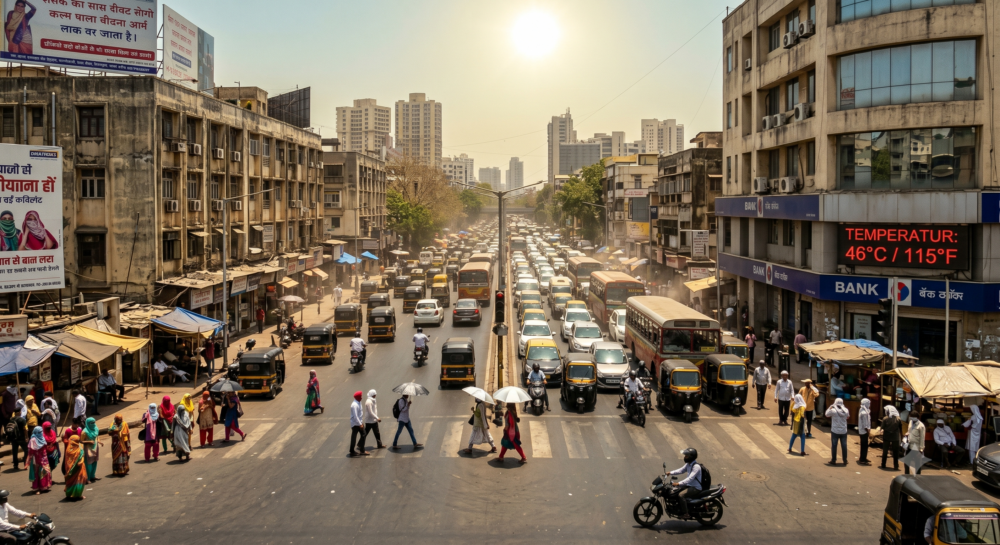
The world’s heat risk is increasingly being shaped not just by rising temperatures but by inequalities in infrastructure, income and access to cooling, with more than 95% of the highest-risk cities concentrated in South and Southeast Asia and Sub-Saharan Africa. These are the findings of a newglobal studyfrom the University of Oxford, which analysed 205 cities with populations of more than a million people to determine where people are most at risk from rising global temperatures. The paper, published inSustainable Cities and Societies, examined key indicators of risk across hazard exposure, vulnerability and coping capacity.
In their study, the researchers describe howextreme heatis emerging as one of the most dangerous and inequitable consequences of climate change, with cities increasingly becoming global hotspots of risk as populations grow and urbanisation intensifies. The analysis found a striking geographical clustering of extreme heat risk. “More than 95% of cities above the 90th percentile risk are concentrated in South and Southeast Asia and Sub-Saharan Africa, where the urban populations are rapidly expanding and resilient systems remain weak,” the researchers wrote.
India,Pakistan,Nigeriaand Ghana host the largest number of cities with high-risk scores. Major tourist destinations and international business hubs, including Cairo (Egypt), Bangkok (Thailand), Hanoi (Vietnam) and Jaipur (India), are also ranked in the top 50. The analysis identifies the city ofAl Basrah in Iraqas the world’s most at-risk.
Read Full Article on Mail & Guardian
[paywall]
“It isn’t just exposure to hot temperatures that matters for risk,” said lead authorNethmi Jayaratne Kariyawasam, of the Oxford Smith School of Enterprise and the Environment. “Our study highlights the importance of multifaceted global heat risk assessments, which reveal the diverse pathways through which urban heat risk emerges.” In many major cities, particularly across Asia and Africa, extreme heat coincides with high vulnerability and limited coping capacity, Kariyawasam said. “This combination can substantially increase heat risk and, in some cases, have life-threatening consequences.” The factors considered include the demographic and socio-economic conditions that increase susceptibility to heat-related illness and mortality, such as age and financial means, as well as access to cooling infrastructure such as air conditioning and ecological buffers such as tree cover.
Cities with similar heat exposure can face radically different risks based on social and infrastructural conditions, according to the study. “However, heat risk in cities extends beyond climatic extremes and is mediated by social vulnerabilities and infrastructural capacities that determine how populations experience and respond to heat,” wrote the authors.
[/paywall]
All Zim News – Bringing you the latest news and updates.
