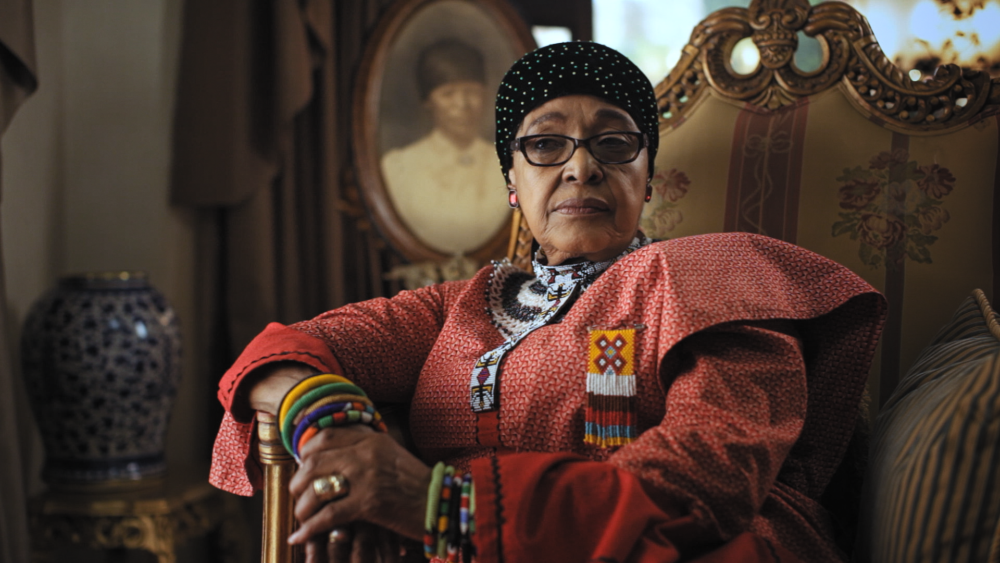
Memory in South Africa does not move in straight lines. It circles back, settles in unexpected places and often resurfaces long after we have convinced ourselves that we have moved on. The Trials of Winnie Mandela,a new documentary on Netflix understands this.
It does not attempt to present a neat retelling of Winnie Madikizela-Mandela’s life. Instead, it opens something up — a conversation that feels at once intimate and national, tender and deeply unsettling. It is impossible to watch it without feeling the generational tension it holds.
For younger viewers, there is a sense of discovery, a reintroduction to a figure who has often been flattened into either myth or cautionary tale. For older generations, it is something else entirely. It is confrontation.
Read Full Article on Mail & Guardian
[paywall]
It is the reopening of wounds that never fully healed, only learned how to sit quietly beneath the surface. The seven-part documentary does not try to resolve this tension. Instead, it leans into it.
At the centre of this telling are her granddaughters, HRH Princess Swati Dlamini Mandela and HRH Princess Zaziwe Mandela-Manaway, who guide the narrative not as historians but as children trying to understand the adults who raised them. Their voices move in and out of the story, sometimes gentle, sometimes probing, often uncertain. There is a vulnerability in the way they ask questions, not as public figures but as family members navigating the weight of inheritance.
It is this framing that gives the documentary its emotional core. Because beneath the politics, beneath the public spectacle, this is ultimately a story about a grandmother. About two young women trying to reconcile the woman they knew, the one who loved them, held them, raised them — with the woman the country debates endlessly.
Many of us grew up in homes where certain conversations were never had directly. They existed on the edges, in hushed tones, in passing comments, in the way adults fell silent when children entered the room. Truths were not offered freely; they were overheard.
Gathered in fragments. Pieced together over time. There is a particular intimacy in the way the documentary mirrors this experience.
The granddaughters do not present themselves as all-knowing narrators. They are searching. They are eavesdropping in real time.
They are asking questions that, in many families, take years to even form, let alone voice. And when Winnie Madikizela-Mandela responds, she does so in a way that feels entirely consistent with the figure history has preserved — stern, unwavering and rooted in her own truth. There is no softening here, no attempt to reshape herself for comfort.
Her answers are not always satisfying but they are resolute. This refusal to bend is perhaps what has always defined her and divided opinion so sharply.
[/paywall]
All Zim News – Bringing you the latest news and updates.
