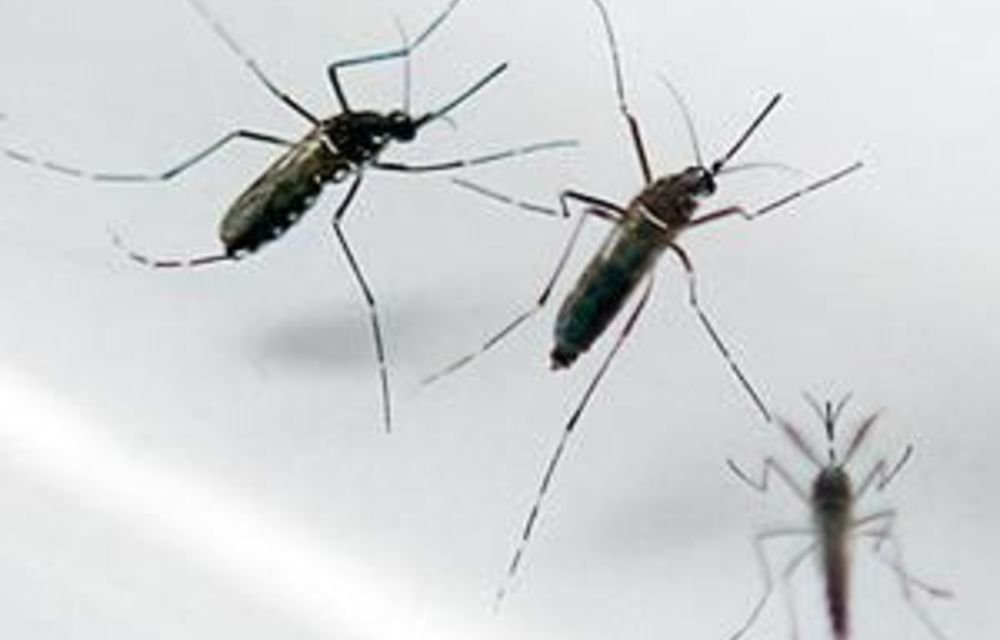
Malaria is caused by a very complex organism (parasite) which was found in mosquitoes trapped in resin from 30 million years ago. The parasite that causes malaria has therefore been around for many years before our own species. Here, I will explore why the parasites that cause malaria are so difficult to beat.
The disease we know as Malaria was thought to be caused by breathing “bad air” (mal aria)that emanates from swamps. This was not “fake news” but a lack of understanding and evidence at the time. As you probably know, swamps and stagnant water are excellent breeding sites for mosquitoes that transmit thePlasmodiumparasites that cause the disease.
The World Health Organization’s 2025 report suggests that 3.2 billion people are at risk of getting malaria. Ninety-five percent of malaria cases are in Africa, where 1.58 billion people live. There were 292 million cases and 600 000 deaths reported, most of which are in young children living in Africa.
Read Full Article on Mail & Guardian
[paywall]
Here are some other numbers. The population of South Africa is around 63 000 000 people and the world has 8 300 000 000 people. The average child with malaria has some 1 000 000 000 000 malaria parasites in their blood (and yes that is 120 times more than the world population) and in two more days there will be 40 times more parasites.
Your immune system or drugs will have to deal with and kill every one of those parasites. I think you will agree that this is a tough task. Amazingly and happily, many patients do survive malaria.
Drugs have been a very effective way to prevent and treat the disease but the parasite has found a way to change and survive the drugs we have been using. The parasite has developed resistance to every drug we have tried: chloroquine, sulphadoxine-purimethamine, mefloquine, piperaquine, amodiaquine, primaquine, atavoquone, quinine, artemisinin and its derivatives. These drug-resistant parasites are found in different countries and they do not need passports to move to a new country, as mozzies, people and planes can do that for them.
We need new drugs. The parasite has to have copper and my students are working on ways to prevent it from getting essential copper. There are some promising new drugs in various phases of development that are not yet available.
We have a very good diagnostic test (which uses antibodies made in South Africa by the National Bioproducts Institute, Durban) which detects the parasite’s Histidine-rich protein II (HRPII) in a patient’s blood sample. Unfortunately, many of the parasites in different countries have learned about the test and so are no longer making the protein and the test does not detect them. To address this, my students have identified new proteins to diagnoseP.
falciparum, P. knowlesiandP. malariaemalaria and there are promising diagnostic targets suggested by other laboratories.
We can still diagnose malaria by staining a slide of the patient’s blood and identifying the parasite with a microscope; it just takes a lot longer and requires more training than the HRPII test, which looks for two lines on a test strip (you may have encountered a similar test for COVID-19). A major breakthrough is that we have two new malaria vaccines RTS,S/AS01 and R21/Matrix-M which aim to prevent sporozoites from getting into the liver. Reports indicate that the RTS,S/AS01 vaccine reduced malaria deaths by 30% in clinical settings and R21/Matrix-M vaccine decreased the number of cases with symptoms by 75%.
The WHO reports that 25 African countries have introduced the vaccines in children from five months to five years old, and the vaccines had 22% reduction in hospitalisations for severe malaria. These vaccines are very promising. There are other vaccines in the pipeline targeting the red blood cells stage and gametocytes.
I have concentrated on targeting the Plasmodium parasite. If a mozzie does not bite you then you won’t get malaria. Insecticide treated bednets, new insecticides, fiddling with mozzie genetics, mozzie larvae eating fish and mozzie baiting are ways mozzies are being targeted.
I remind you mozzies have been around much longer than we have … We saw a huge rise in malaria cases to 64 000 in South Africa after the rains in Limpopo, Mpumulanga, and KwaZulu-Natal in 2000. We had 4 639 cases in 2024. You will be very aware of the recent heavy rains and floods we had earlier this year in Mpumulanga and we hope that we do not see the increase in the number of malaria cases we saw in 2000.
Retired Professor J.P. Dean Goldring has, for the last 40 years, worked on malaria vaccines and cerebral malaria and, more recently, identified novel malaria diagnostic targets for malaria Rapid Diagnostic Tests that detect Plasmodium falciparum, vivax, knowlesi, and ovale parasites. He has given 6470 lectures and taught 7642 students during his career. Currently, Prof Goldring runs a weekly dissection of scientific journal articles, lab meetings, and workshops on Scaffolding Exegetic Academic Literacy.
[/paywall]
All Zim News – Bringing you the latest news and updates.
