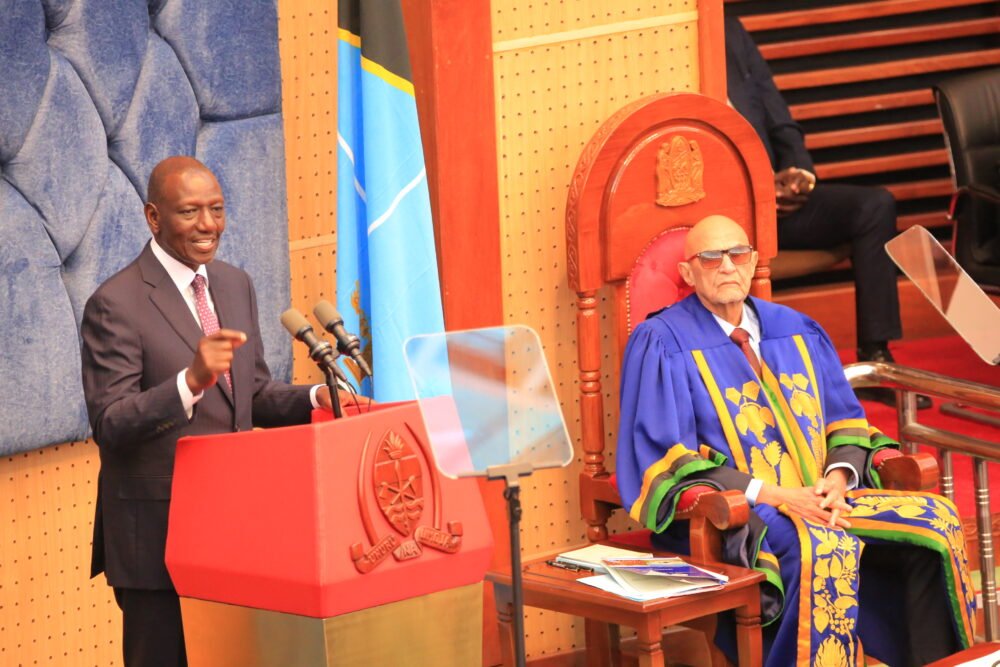
Kenyan PresidentWilliam Samoei Rutohas projected that bilateral trade between Kenya and Tanzania will exceed $1 billion (about R17bn) in 2026, signaling strengthening economic ties and rising cross-border investment between East Africa’s two largest economies. Speaking before Tanzania’s parliament in Dodoma on Tuesday, Ruto said trade between the two countries reached about $860 million in 2025, supported by increased private sector activity,improved business conditionsand regional integration efforts. “Kenya and Tanzania are deeply interdependent economies.
While the progress we have made is encouraging, it represents only a fraction of what is possible if we fully unlock our shared potential.” Ruto said investment remained a cornerstone of bilateral relations, with Kenyan firms committing more than $1.7bn across strategic sectors such as manufacturing, energy, logistics, agriculture and financial services in Tanzania. The investments had contributed to job creation, technology transfer and the development of local industrial capabilities. At the same time, Tanzanian investment in Kenya had grown to an estimated $336m, reflecting a gradual shift toward more balanced economic engagement.
Companies such as Taifa Gas, Amsons Group and Lake Gas had expanded into the Kenyan market over the past three years, particularly in the energy and gas distribution sectors. “With ongoing strategic investments, Tanzanian capital inflows into Kenya are expected to more than double by the end of this year, further strengthening our economic partnership,” Ruto said. He noted that cross-border investments were increasingly shaping regional value chains, particularly in manufacturing and agro-processing.
Read Full Article on Mail & Guardian
[paywall]
The Kenyan leader said the trajectory presented an opportunity for the two countries to expand their influence in the East African Community (EAC) and tap into the wider market offered by theAfrican Continental Free Trade Area. “Intra-regional trade within the EAC remains low, at between 10% and 15% of total trade, which means that the majority of our commerce still takes place outside the region. This gap represents a major opportunity for expansion.” Ruto said that strengthening intra-regional trade would boost economic growth and enhance resilience against global economic shocks, including supply chain disruptions and fluctuating commodity prices.
[/paywall]
All Zim News – Bringing you the latest news and updates.
