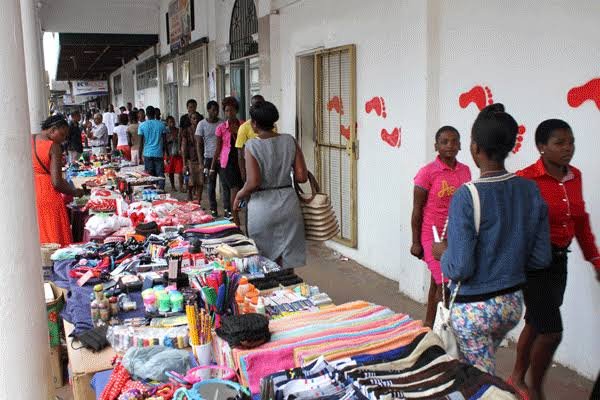
CLAIM:The informal sector in Zimbabwe is rated at 64% by the multinationals second only to Bolivia 🇧🇴
Zimbabwean businessman, Busisa Moyo, was engaged in a social media debate on the country’s informal sector and its impact on formal businesses Commenting on the closure of a branch of a big chain supermarket, he said, ‘Formal businesses struggling to stay in the game because of informalisation & weak bye (sic) law enforcement’ He furtherclaimedthat ‘The informal sector in Zimbabwe is rated at 64% by the multinationals second only to Bolivia 🇧🇴 let’s be serious about magnitude’ An informal economy (informal sector or shadow economy) is the part of any economy that is neither taxed nor monitored by any form of government
The International Labour Organisation (ILO)definesthe informal sector as all economic activities by workers and economic units that are not covered or sufficiently covered by formal arrangements at law Formal arrangements include adherence to contracts in business transactions, applying labour regulations, social security contributions, banking proceeds, paying requisite taxes and council levies, and following legal channels on importing and exporting goods Informality means a lack of (i) social protection, (ii) rights at work, and decent working conditions; and for enterprises, it means low productivity and lack of access to finance Some of the sector sub-sectors where informality is high include: (i) Retail; (ii) Distribution; (iii) Foreign currency informal/parallel/black market and (iv) Services- parallel structures running close to formal establishment
According to World Economics, the size of Zimbabwe’s informal economy is estimated to be 64.7% which represents approximately $73 billion at GDP PPP levels.
Source: Factcheckzw
