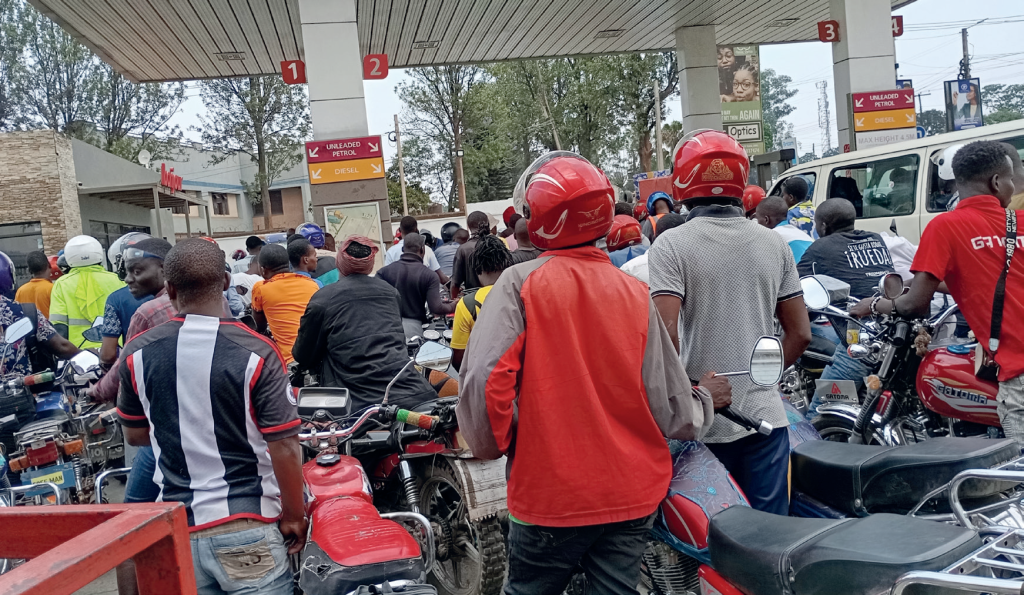
At exactly 5.30am, before most shops open their shutters, the engines begin to growl at Soche Quarry in Blantyre. Young men mostly in tattered reflective jackets lean against their motorcycle taxis locally known as kabaza, some laughing, others quiet, waiting for the first customer of the day. Dust rises with every passing minibus.
However, for 24-year-old Blessings Mhone, each turn of the ignition key is not just about transport. It is about survival, dignity and a dream that stretches far beyond the road. “I didn’t plan to be a kabaza rider,” he says, adjusting his helmet.
“After passing the Malawi School Certificate of Education examinations, I looked for work everywhere. Nothing came. This bike became my office.” Mhone has been riding for three years.
[paywall]
On a good day, he makes between K20 000 and K30 000 before the recent fuel adjustment and the daily rental fee he pays to the motorcycle owner. On a bad day, especially during the rainy season, he can return home with less than half that amount. “This motorbike is not my future,” Mhone says firmly.
“It is a new start. I am saving to buy my own motorcycle first. After that, I want to start a small hardware shop at home in Kasungu District.” In both rural and urban trading centres across Malawi, thousands of young men share a similar story.
The kabaza sector has quietly become one of the largest employers of youth in the informal economy. With limited formal job opportunities and growing economic pressure, motorcycle taxi riding offers immediate cash, flexible hours and a sense of independence. But behind the speed and constant movement lies uncertainty.
Mike Phiri, 27, has been riding in Blantyre’s Ndirande Township for five years. He supports a wife and two children. “People think we make a lot of money,” he says with a tired smile.
“But fuel prices go up. Spare parts are expensive. Sometimes police mount roadblocks, and we lose time. It is not easy.” Phiri’s biggest dream is to build a two-bedroom house in his village in Thyolo District.
[/paywall]
All Zim News – Bringing you the latest news and updates.
