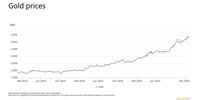
Here are five key economic and business factors to keep an eye out for in 2026. Gold’s price smashed new records in 2025, reaching over $4,000 an ounce – double the price it was fetching just two years before. Over the course of the year its price surged over 60%, its biggest annual gain in over four decades.
And a combination of global political/economic uncertainty and robust central bank buying should keep prices elevated in 2026. South Africa, which once accounted for close 80% of global output, is no longer the world’s top gold producer – it’s not even in the top 10. But it still has a material impact on the economy, with export receipts from this bull run lending support to the rand.
It can also swell the Gold and Foreign Exchange Contingency Reserve Account of the South African Reserve Bank (Sarb), providing a potential lifeline to the Treasury to lower borrowing costs. Unlike gold these days, South Africa is the undisputed world heavyweight champion producer of platinum group metals (PGMs), and these prices have also rocketed in 2025, albeit from depressed levels. Platinum’s price soared almost 150% to $2,300 an ounce by Christmas Eve, but in the last week it lost some ground.
Read Full Article on Daily Maverick
[paywall]
It is still over double the price it was fetching a year ago, a trend mirrored by palladium. The price of rhodium also doubled to more than $9,000 an ounce. A range of factors explain this rebound including tightening supplies, a mending global economy, and the growing traction of hybrid vehicles that require more platinum in their catalysts than diesel or petrol vehicles.
If this momentum can be maintained in 2026, it will also have a material effect on the South African economy with marginal shafts spared from closure and previously stalled investments made in new production. Sarb has made monetary policy interesting again! Theslashingof its mandated inflation target to an effective 2% to 4% from 3% to 6% promises to be a game changer that should mean lower inflation and interest rates in the long run.
Consumer price inflation has been cooling and was 3.5% on an annual basis in November. The Sarb has said that it remains “… on track to deliver 3% inflation over the medium term”.
Inflation has a corrosive impact on household incomes and business costs, with implications for the wider economy. Containing it at lower levels in line with South Africa’s trading partners is crucial. The announced drive tovaccinateSouth Africa’s national cattle herd from foot-and-mouth disease in the wake of crippling outbreaks will test the capacity of the state to rise to the occasion.
The herd includes about 7.2 million head of cattle on commercial farms and around five million on communal land. Public/private partnerships will be key as state-run animal vaccine producer Onderstepoort Biological Products is a shell of its former self. The stakes are high and not just for the price of steak.
Livestock and poultry together account for about half of South Africa’s agricultural economy and nipping the outbreaks in the bud is vital. In the Medium-Term Budget Policy Statement (MTBPS) government debt was forecast to stabilise in 2025/26 at 77.9% of GDP, up slightly from 77.4% previously. Building on the positive momentum of the S&P credit rating upgrade, which came after the unveiling of the statement, will require this target remaining firmly in place.
[/paywall]
