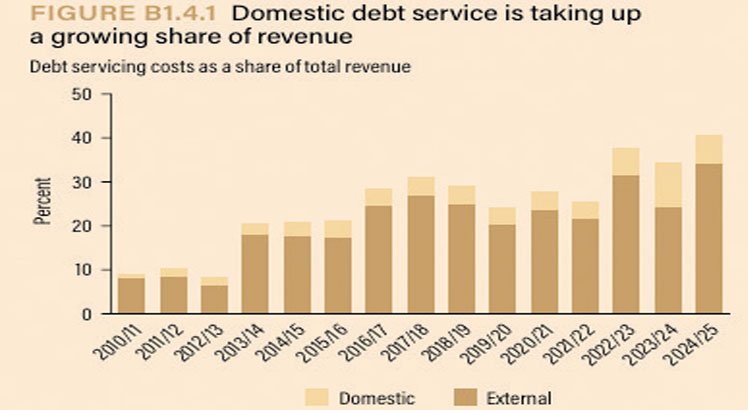
The World Bank has urged Malawi to urgently restructure its K16 trillion domestic debt given that debt servicing continues to absorb an estimated 34 percent of government revenue and that domestic liabilities now exceed external obligations. The Bretton Woods institution has proposed a structured Domestic Debt Reprofiling (DDR) programme anchored in a credible macro-fiscal framework, urging authorities to clearly define whether the objective is liquidity relief such as maturity extensions or coupon reductions or deeper solvency correction. In its Malawi Economic Monitor number 22 published last Tuesday, the bank argued that domestic debt is on a “precarious trajectory”, with high-yield Treasury notes ranging between 28 and 35 percent exerting severe cash-flow pressure and crowding out priority spending.
It cautions that failure to act could raise the risk of a disorderly domestic default with implications for financial stability, credit provision and growth. The bank has recommended transparent, rules-based terms, careful calibration of relief to the banking sector’s loss-absorption capacity and strong communication to preserve market confidence. In an interview, Minister of Finance, Economic Planning and Decentralisation Joseph Mwanamvekha said government has already engaged an advisory firm to design the reprofiling strategy.
He said government could also buy back some of the domestic debt. “The plan outlines a comprehensive reform agenda already underway, including strengthened domestic revenue mobilisation, expenditure control measures and an advanced debt restructuring strategy aimed at restoring debt sustainability,” said Mwanamvekha, but did not outline how such buybacks can be financed. That omission has drawn caution from economists, with University of Malawi economics lecturer Edward Leman saying debt reprofiling appears increasingly appealing under current macroeconomic conditions of slow growth, high inflation and constrained revenues.
[paywall]
But he warned that design will be critical to avoid liquidity shocks and financial sector stress. “A well-designed operation could eventually support lower interest rates and private-sector recovery,” said Leman, cautioning that weak coordination and poor communication can amplify uncertainty. In a separate interview, Christopher Mbukwa of Mzuzu University said debt reprofiling should be pursued alongside stronger revenue mobilisation and expenditure restraint.
“The most feasible option for us is reprofiling. A well-designed debt reprofiling is one that reduces government spending pressure without disadvantaging the banks,” he said, noting that large-scale buybacks would require fiscal resources or concessional external financing. Scotland-based Malawian economist Velli Nyirongo said it is highly unlikely that the Government of Malawi has sufficient fiscal space to buy back a significant portion of its domestic debt without creating additional strain on public finances.
[/paywall]
All Zim News – Bringing you the latest news and updates.
