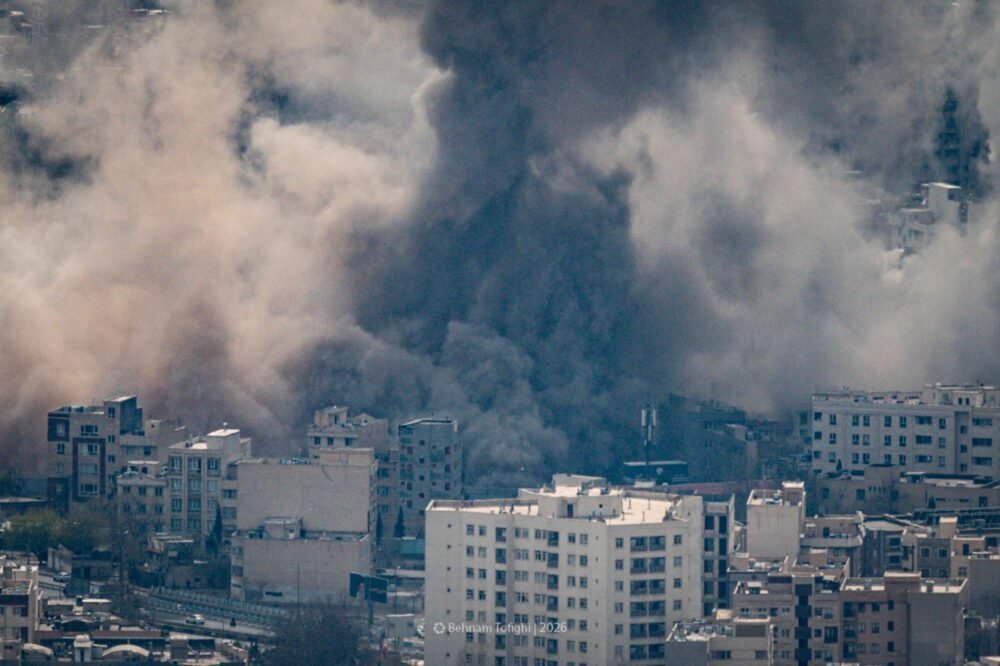
As missiles, drones and military convoys dominate coverage of the unfolding US-Israel war with Iran, another, slower form of destruction is taking shape — one that threatens ecosystems, water, soil, air and the climate itself. For ReverendRachel Mash, the environmental coordinator of theAnglican Church of Southern Africa, the environmental cost of war is inseparable from human suffering. “War is a long-term devastation on a population; you are destroying something for generations ahead, even two, three, four generations,” she said.
One of the most striking environmental phenomena linked to the conflict is the emergence ofblack rain over Tehranafter airstrikes on fuel depots and oil facilities. Black rain occurs when soot and toxic particulates rise into the atmosphere and fall with rain, carrying hazardous chemicals into soil, water systems and urban surfaces. In March, satellite and witness reports documented blackened rainwater and oily residues, with analysts warning the rain may carry benzene, toluene, acetone, methylene chloride and other hydrocarbons, raising long-term risks for agriculture, drinking water and human health.
Some Iranian officials and climate advocates have beguncalling such attacks ecocide, capturing thedestruction of entire ecosystems, not just human communities. The UN Environment Programme (Unep) haswarnedthat attacks on oil facilities and industrial sites in and around Tehran are producing heavy smoke with hazardous compounds that raise concerns for both human and environmental health. Pollution from uncontrolled fires can enter soil and water, leach into groundwater and be absorbed by crops, risking contamination of food supplies.
Read Full Article on Mail & Guardian
[paywall]
Key infrastructure such as desalination plants, critical to water security in the Gulf region, is also vulnerable to destruction — potentially creating catastrophic consequences for access to freshwater even before war-related pollution is fully accounted for, Unep said. Under the Geneva Convention, attacking desalination plants is a war crime. “When you bomb fuel depots or one of these oil fields, the fires burn for weeks before they can be controlled,” Mash said.
“The carbon emissions are incredible and that’s not even counting the emissions of the military itself: the massive ships sailing from the US to the Middle East, the bombers, the drones … “It’s just insanity. We’re increasing our carbon emissions at a time when we should be doing the opposite and at the same time destroying people’s ecosystems, their land and their water — all for generations to come.” The Conflict and Environment Observatory estimates thatmilitaries are responsible for roughly 5.5% of global greenhouse gas emissions. Brown University’sCosts of War projectfound that between 2001 and 2017, the US military alone emitted 1.2 billion metric tons of greenhouse gases, including fuel for aircraft, ships and vehicles deployed worldwide.
[/paywall]
All Zim News – Bringing you the latest news and updates.
