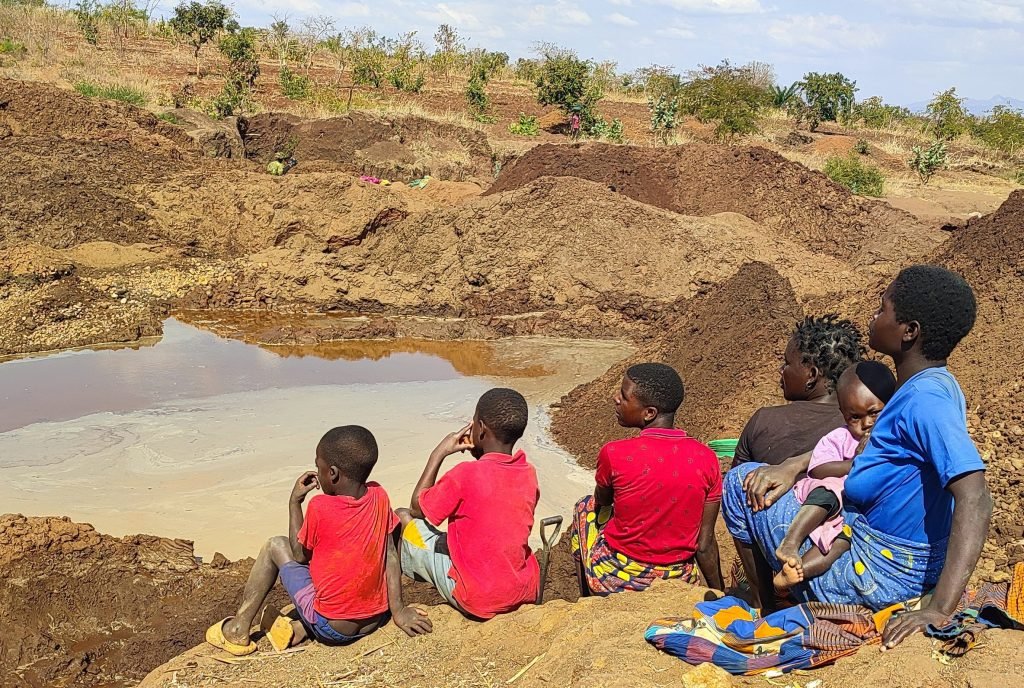
It is a sweltering afternoon in Kafulatira Village, Traditional Authority Chimutu in Dowa District, where an illegal gold mining site buzzes with a crowd jostling in the pits, digging, hauling and hoping. A few metres away, Enelesi Chisale, 29, sits with her children. An exercise book lies open on the ground.
Her son, a Standard Four learner, stares helplessly at an arithmetic problem he cannot solve. “I try to help him,” she says, her eyes drifting to the miners. “But the numbers mean nothing to me.” In the vicinity, children emerge from the mine, their faces soiled.
“When I see children digging in the pits, I am afraid,” Chisale says. “The mines collapse. But if my son loses hope in school, what future is there?” Across Malawi, low literacy levels among parents quietly undermine their children’s education.
[paywall]
A study by Mervin Mutonga of Domasi College of Education in Zomba found that many parents are unable to support their children in developing reading skills in early grades because they themselves cannot read or write. The researcher documented parents watching helplessly as their children struggled with literacy. The report quotes one parent as having said: “Though teachers encourage us to teach our children how to read, my challenge is that I am illiterate.” The findings paint a stark picture: Parents who never learned to read are now raising children who struggle with literacy.
Without support at home, many learners fall behind in the early years and others drop out. “This pattern is common across many communities,” says DVV International communications officer Dyson Mthawanji. “The illiterate parents will see their kids struggling with basic literacy and numeracy skills, but there is nothing they can do to help.
Such families face the risk of having uneducated generations, potentially sustaining a cycle of poverty.” DVV International supports adult learning and education through policy development, community skill centres and literacy programmes. “Parents should enrol for adult literacy and education classes to acquire literacy and numeracy skills and other relevant life skills,” says Mthawanji. “Adult learning is the backbone of community development.”
[/paywall]
All Zim News – Bringing you the latest news and updates.
