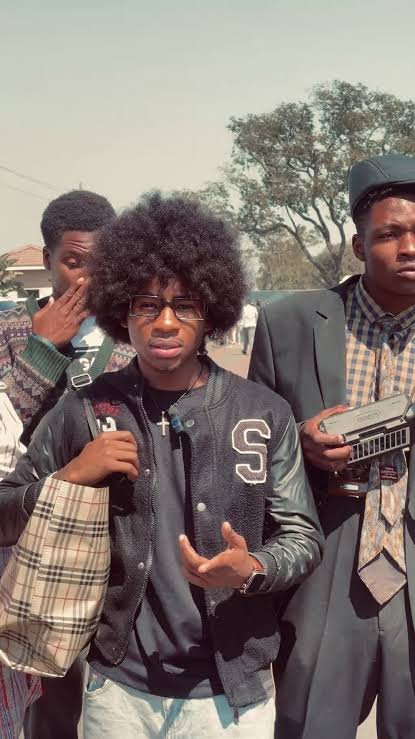
“When you thought you had seen it all,” said a colleague last week. He had visited his sister’s house and asked for his mzukuru (nephew). “She’s gone for ‘Recents’,” the sister replied.
“Recents” is not a person. It is a place. Across Harare and in many urban centres, teenagers now flock to photo studios and boutiques styled as “Recents” which are spaces where they hire designer clothes, pose for curated photoshoots, and post the Kodak moments on Instagram, TikTok and WhatsApp statuses.
Long back, young adolescent boys would exchange clothes and bandanas as they went to floss at clubs Circus, Archipelago, Sarahs (later Wiggle then Synergy), Tube and Jobs etc. Those in rural areas would borrow ‘black horse’ bicycles to ride to the growth point and show off to the girls. They would also look for mpfanha wembudzi – a herb that stimulated the fast growth of pubic hair, which was a sign of manhood from boyhood.
Read Full Article on ExpressMail Zimbabwe
[paywall]
The smartphone has added a 24-hour audience. Developmental psychologists call it the “imaginary audience” effect which is the belief that others are constantly watching and judging. Yet the picture is not one-sided.
Digital platforms have expanded learning, activism and entrepreneurship. Teens now run online thrift stores; makeup tutorials and coding clubs which are flourishing. Mental health support groups on WhatsApp have helped teens in Mabvuku and Highfield access counselling.
But the risks are equally real. The Ministry of Health’s 2025 Youth Mental Health report flagged “social comparison” as a leading stressor – the gap between online portrayal and offline reality fueling anxiety, depression and low self-esteem. Police and school authorities note a pattern of teens stealing to fund their online presence in Glen Norah, Chitungwiza and Bulawayo.
Girls especially face pressure to transact sex for gifts, photoshoots or cash to buy into specific social brackets. Harmful trends have evolved from Vuzu Parties – teenage sex parties at homes to “Mjeje” –sex parties in kombis after police clampdowns. “What we’re seeing is the commodification of identity,” said Thamsanga Mhlanga, sociologist and graduate from the University of Zimbabwe.
“Adolescents are no longer just growing up. They are branding up. The digital economy has turned self-presentation into a product and ‘Recents’ is the factory floor.” Dr Patience Gombedza, a Harare-based adolescent psychologist, says the digital shift has compressed identity formation.
“Adolescents used to experiment with identity in private, with friends. Now they do it in public, permanently recorded. The pressure to perform a perfect life is constant.”
[/paywall]
All Zim News – Bringing you the latest news and updates.
