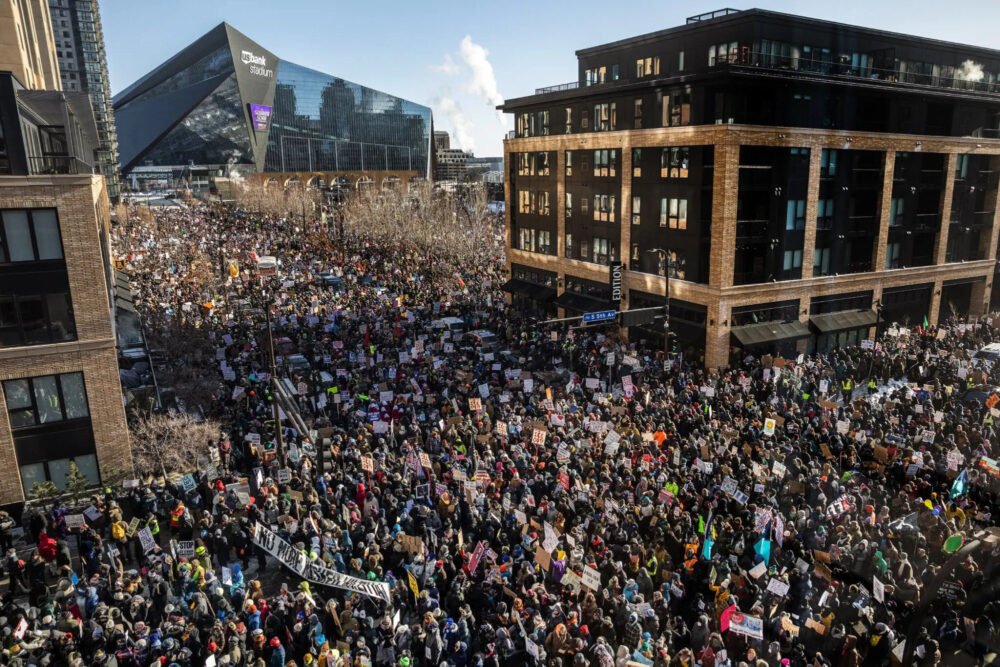
What began as an enforcement operation has evolved into a wider political and institutional test, drawing scrutiny from state governments, congress and civil-rights groups. Pretti, an intensive-care nurse and US citizen, was shot during a federal immigration enforcement operation in Minneapolis in late January. His death followed another fatal shooting earlier in the month, involving federal agents, intensifying scrutiny of Immigration and Customs Enforcement operations in the state.
Together, the incidents have prompted sustained demonstrations in Minnesota and beyond, with protesters demanding accountability and questioning the scale and conduct of federal immigration enforcement under PresidentDonald Trump’s renewed push to expand interior operations. Witness accounts and video footage circulating publicly have complicated official explanations of Pretti’s death. Federal authorities initially described the shooting as a response to a threat but witnesses have disputed that account, saying Pretti was unarmed and attempting to assist another person during a chaotic confrontation.
The divergence between official statements and civilian testimony has fuelled public distrust and sharpened calls for an independent investigation, with critics arguing that delays and limited disclosure have compounded public anger. The shooting took place against the backdrop of a large-scale federal operation that has seen thousands of immigration officers deployed across Minnesota since December. Federal officials have described the surge as necessary to enforce immigration law and combat fraud but state and local leaders have criticised its scale and tactics.
Read Full Article on Mail & Guardian
[paywall]
Minnesota officials argue that the operation has disrupted daily life, strained law-enforcement capacity and heightened fear among residents, regardless of immigration status. Minnesota’s attorney-general has sought judicial intervention to limit aspects of the deployment, raising constitutional concerns about federal overreach and the erosion of state authority. It also underscores how immigration enforcement has become a focal point for wider disputes over federalism, consent and the limits of executive authority.
[/paywall]
