A conversation about fishing boats that can’t go to sea, reading the ocean and the changing nature of fishing. Kalk Bay harbour on the False Bay coast was once alive with boats, crew and families making their living from the sea. For generations, the Poggenpoel family has been part of that story.
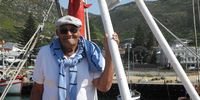
Today, 72-year-old Kobus Poggenpoel sits beside his boat Melissa Kelly, looking out over a harbour that feels more like a museum than a working port. I spoke to him about the boats themselves – their history, how they were built, how they worked — and about why, these days, they mostly lie tied to the quay. That boat, Melissa Kelly, we had her since 1978.
A lot of boats came out of there. Before that, we had other boats — Mary and Dawn, Ana Amelia. Our family always tried to build up boats.
Read Full Article on Daily Maverick
[paywall]
My dad and his brothers, they worked [on] other people’s boats first — Mr Williams, Mr Klein. Then my uncle said, no, let’s work for ourselves. So they bought Tessabee, worked her off, renamed her Ana Amelia after my grandmother.
From there the family grew into boats. At one stage we had four. Now we only got two left — Melissa Kelly and Mary and Dawn.
She’s an all-wood boat. Solid hardwood. Those days they imported the wood, you got it in Woodstock.
The old way. She’s mixed. Bottom hull: glass fibre; cabin: glass fibre; but the gunwales and bulwarks: still wood.
That’s how they built in the seventies — half and half. [Laughs] Names, always an argument in the Kelly after two granddaughters in the family, Melissa and Kelly. That way, no arguments.
Names change, but the boat stays in the family. Yes, three little double-ender whaling boats with sails. Navy type.
Not for whales — just the style. Everything [was] hand-line in those years. They’d row out, fish with hand-lines, bring back snoek, mackerel, stumpnose. That’s how our family started here.
[/paywall]
