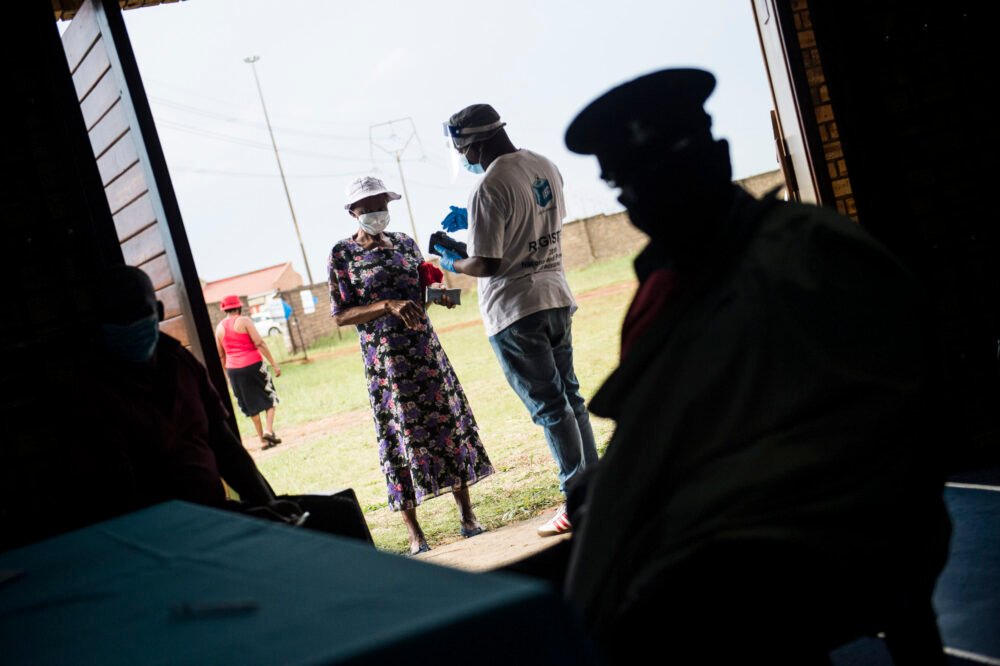
South Africa’s next local government elections will not be stolen with ballot boxes or soldiers. If they are interfered with, it will be done quietly: through narratives, money flows, algorithms and timing. That is how modern power moves.
Dismissing municipal elections as politically minor may be the most dangerous mistake South Africans make this decade. Democracies rarely collapse in national spectacles. They erode in contests deemed too small to guard fiercely.
Local elections are low on turnout, fragmented in attention and heavy on coalition uncertainty. This is where foreign influence finds its easiest entry points. In South Africa’s current geopolitical climate, that vulnerability is real.
Read Full Article on Mail & Guardian
[paywall]
Deteriorating US–South Africa relations have transformed what might have been a routine electoral cycle into something far more consequential. Since Donald Trump’s return to the White House, diplomatic friction has hardened into strategic estrangement. Pretoria’s insistence on non-alignment, defence of BRICS military cooperation, and refusal to dilute transformation policies have placed South Africa outside Washington’s preferred global order.
The US has never confined its foreign policy to diplomacy alone. Its documented history of election meddling shows a pattern: where governments are seen as ideologically hostile, economically inconvenient or geopolitically disobedient, electoral processes become instruments of influence. Often this occurs through agenda-setting, narrative-shaping and selective destabilisation rather than overt coercion.
Between 1946 and 2000, the US intervened in dozens of foreign elections, mostly via “information operations” and financial influence. The point is not that the US interferes in elections — that is neither controversial nor novel. The urgent question is what interference looks like now, in a digitally saturated democracy with weakened institutions and fragmented local politics.
Modern influence does not need to falsify results. It shapes environments. Most dangerously, South Africa’s intelligence and security institutions are decayed.
Years of politicisation, cadre deployment and operational paralysis have left intelligence agencies fragmented and reactive. Parliamentary oversight exists, but capacity is thin. Strategic forecasting is weak.
Cyber and information warfare capabilities lag behind those of global powers who specialise in operating below detection. In such an environment, sophisticated foreign interference only needs to outpace the state. Municipal elections are ideal laboratories for influence operations.
They shape coalition mathematics, weaken dominant parties incrementally and generate media narratives of inevitability and decline. Hung councils are not merely governance challenges; they are political pressure points. They normalise instability, exhaust voters and erode confidence in democratic efficacy.
Replicated nationally, the effect is transformative. At the municipal level, interference could take specific forms: targeted funding of technocratic “good governance” initiatives in metros where ANC-led coalitions are unstable, strengthening opposition narratives of incompetence; coordinated digital amplification of service delivery protests — real grievances selectively elevated to produce a sense of collapse; disproportionate international media attention on certain councils, constructing a national storyline of decline. None of this requires inventing discontent.
It curates attention. Civil society debate must be handled carefully. Civil society performs indispensable work, often filling gaps the state leaves behind.
The concern is not fabrication of grievances, but selective amplification, shaping whose voices are heard, whose failures are internationalised, and whose demands are framed as urgent. In a constrained media and funding environment, amplification is political power. South Africa has seen this playbook elsewhere, often with moral clarity.
The danger now is proximity. Raising these concerns is not conspiracy. Venezuela, for example, did not suddenly become geopolitically contested; the contest unfolded gradually, through elections that were formally intact but politically destabilised.
Sovereignty is rarely stolen outright. It is reinterpreted until negotiable.
[/paywall]
All Zim News – Bringing you the latest news and updates.
