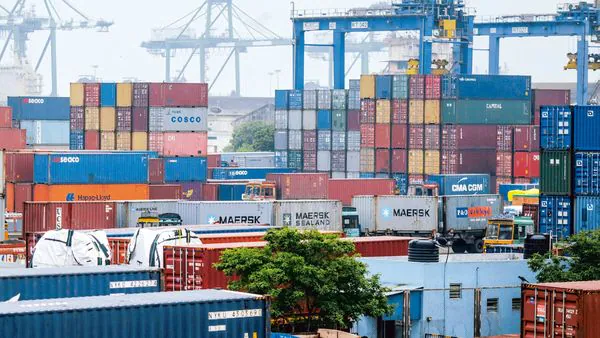
Trade barriers are limiting Malawi’s export potential and contributing to potential revenue losses of about $235.1 million, or roughly K411.8 billion, according to the latest World Bank’s Malawi Economic Monitor (MEM). The MEM, which was launched in Lilongwe on Tuesday, mirror analysis of 2023 trade data, identifies discrepancies between Malawi’s reported trade figures and those of its trading partners. The gaps—covering negative trade discrepancies, positive discrepancies, orphan imports and orphan exports—suggest large-scale misreporting, misclassification and possible smuggling.
While the report cautions that trade gaps do not automatically equate to fraud, it estimates the losses in orders of magnitude equivalent to between 31 percent and 37 percent of duties and trade taxes. Speaking at the MEM launch, Deputy Minister of Industry, Trade and Tourism Edgar Tembo acknowledged the structural challenge, saying export performance has not kept pace with import requirements. “The challenge is not to suppress productive imports, but to expand and diversify exports,” Tembo said.
He said Malawi’s export base remains concentrated in tobacco, tea and sugar, with limited value-addition and weak manufacturing exports. Thanthwe Farms chief executive officer Ngabaghila Chatata said the process of exporting can be prohibitively expensive. “It is more expensive to send products to South Africa than it is to send elsewhere,” she said on the sidelines of the launch.
[paywall]
Malawi Confederation of Chambers of Commerce and Industry (MCCCI) chief executive officer Daisy Kambalame said the private sector was ready to work with government to address some of the bottlenecks. In a separate interview, MCCCI president Wisely Phiri said businesses require greater predictability in policy and enforcement. “How do we export if all these things are coming up?” Phiri said, referring to multiple roadblocks and procedural requirements that exporters encounter beyond formal border posts.
The report notes that each additional day of delay before shipment can reduce trade by more than one percent, citing international research. Foreign exchange policy has added further strain. Exporters are required to convert 25 percent of their foreign exchange proceeds at the official rate.
In a market characterised by parallel rate spreads, exporters say the requirement erodes margins. “There’s no point in mandatorily giving up 25 percent at one rate to tomorrow buy it back at another,” said Illovo Sugar chief executive officer Ronald Ngwira.
[/paywall]
All Zim News – Bringing you the latest news and updates.
