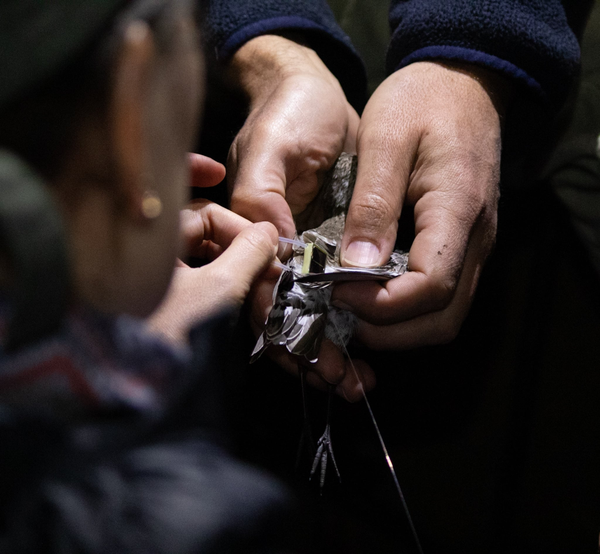
A groundbreaking new research initiative is set to uncover theremarkable journeys of migratoryshorebirds by deploying satellite tracking devices on species such as theCurlew sandpiperandGrey plover— marking a first for South Africa. Led byBirdLife South Africa, the project focuses on tagging, colour-ringing and monitoring birds at key coastal sites, including theBerg River estuary, to better understand their movements along the Africa–Eurasian Flyway, a major migratory route covering Europe, Asia and Africa. The aim is to identify critical habitats and inform conservation efforts that stretch across continents.
The organisation describes the initiative as a major milestone for southern Africa, where the migratory routes, stopover sites and breeding grounds of local shorebird populations have long remained poorly understood. “While tracking studies have been conducted elsewhere along the flyway, few tagged birds have reached South Africa, leaving the migratory routes, stopover sites and breeding areas of South African populations poorly understood,” said BirdLife South Africa. “This is the first time long-distance Palearctic migratory shorebirds, in this case the Curlew Sandpiper and Grey Plover specifically, have been fitted with tracking devices in South Africa.” ForJessica Wilmot, the flyway and migrants project manager, the project builds on years of work along the country’s west coast while expanding its reach far beyond national borders.
“BirdLife South Africa has worked along the West Coast for many years and this project builds on that foundation, showing not only how landscapes are connected within South Africa but how shorebirds link us tocritical wetlandsacross the continent,” she said. “Following the recentRamsar Conference of the Parties 15 in Victoria Falls, it’s a timely reminder of how important these ecosystems are.” Wilmot said efforts to track migratory shorebirds in southern Africa had historically been constrained by cost, capacity and technology. Tracking devices remained expensive and, until recently, many were too large for small-bodied species such as Curlew sandpipers, she said.
Read Full Article on Mail & Guardian
[paywall]
Globally, most tracking research had focused on Europe, where relatively few birds travelled as far south as Africa. At the same time, South Africa had experienced a decline in wader ringing and trapping expertise. Decades ago, the country played a leading role in flyway research through Safring, theSouth African Bird Ringing Unit, but reduced funding and capacity made large-scale wader work, which required specialised teams and coordinated field efforts, increasingly difficult to sustain. What had changed, Wilmot said, was a renewed focus on flyway-scale conservation combined with advances in lightweight tracking technology that now made it possible to safely monitor smaller species.
[/paywall]
All Zim News – Bringing you the latest news and updates.
