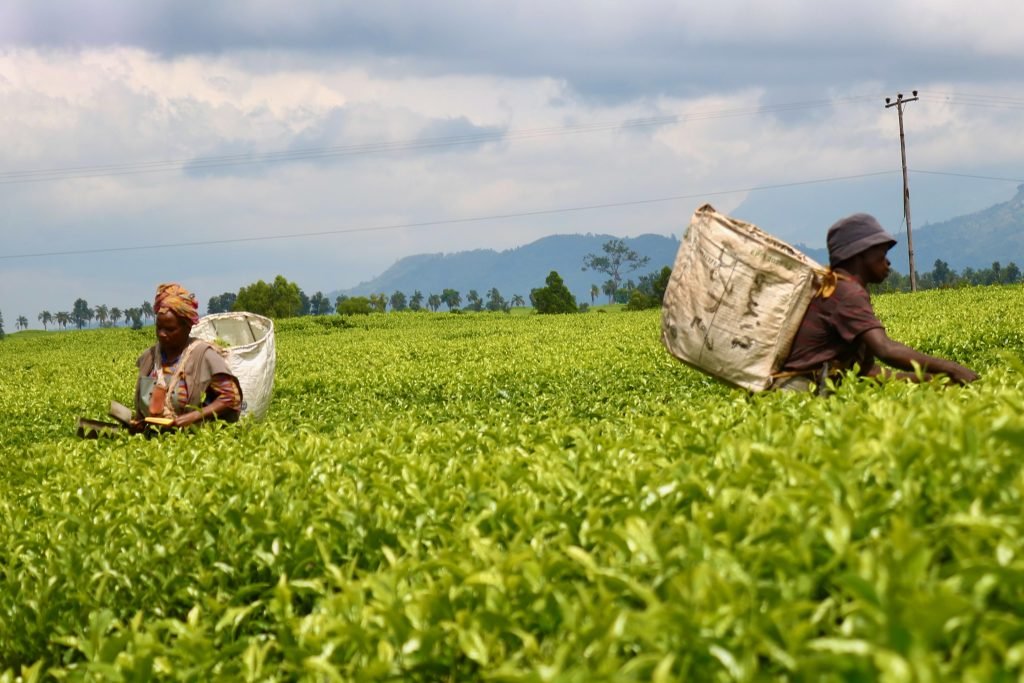
Thyolo farmers are toning down on maize growing to tee up generational wealth through a leaf long restricted to colonial-era estates in their vicinity, our Staff Writer JAMES CHAVULA reports. When the first rains descended on Mlenga Village in Thyolo District last October, Alex Magilasi biked 10 kilometres to plant tea in his hilltop maize field. Tea rows split maize ridges in the field, the size of a football ground.
“Tea is more profitable than maize,” he says. “When I harvest the maize for food, I’ll slash the stalks to cover the soil and conserve moisture so that my tea does not wilt in the dry season.” This rainy season, Magilasi planted 12 000 tea seedlings, the largest of its kind, with support from the government’s flagship Agriculture Commercialisation (Agcom) project. The remaining 7 000 are planted downhill.
“This is a big leap for me,” he recounts. “I started off with 500 plants in 2020, then added 2 500 in 2021, none in 2022, about 3 000 in 2023 and 1 500 in 2024.” His growing tea fields illustrate local farmers’ switch from maize to the leaf once restricted to sprawling colonial-era plantations. Magalasi belongs to Msuwadzi Tea Association in Thyolo District, which has expanded from 192 members to 319 since its inception in 1972.
[paywall]
The group was among the pioneers of the national initiative to ensure local Malawians get a share of tea production, the country’s third -largest export. The most loved drink after water is blamed for pushing locals to rocky, barren and clustered hilly settlements in Thyolo and Mulanje districts. Last year, the association, comprising 174 women and 145 men, won a K189 million matching grant from the $326 million Agcom to buy high-yielding tea seedlings and a pruning machine.
The project, funded by the World Bank, Multi-Donor Trust Fund and Global Multi-Umbrella Trust Fund, remitted a K74 million instalment last year. “Tea is a long-term investment, that’s why we came together to collectively identify inputs, extension services and markets,” says Msuwadzi Tea Association vice-president Mark Mkanda. The locals’ inroads in tea production started with seedlings that the government shared to give locals a stake.
[/paywall]
