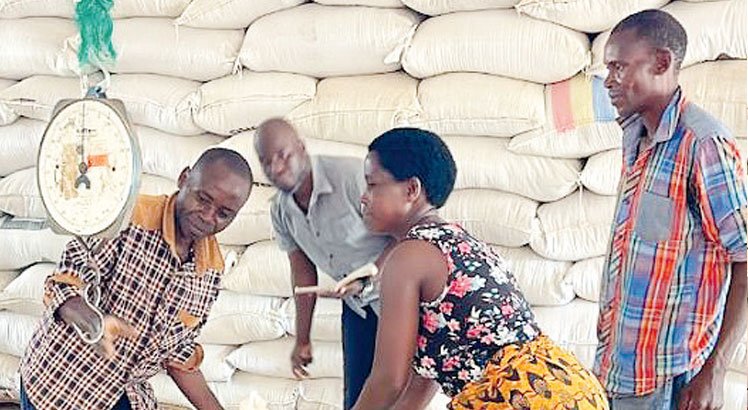
Local agricultural policy think-tank Mwapata Institute has recommended a three-pronged policy action to localise the country’s food systems based on lessons from regional and global initiatives. In its study titled ‘Policy lessons for the food systems transformation agenda in Malawi’, the institute observed that public expenditures on agri-food systems remain largely focused on maize, undermining nutrition and safety of the diets. The study said while existing policy frameworks demonstrate strong commitment, the biggest challenge has been financing the implementation of the policies and strategies.
Published by Anderson Gondwe, Dinah Salonge and Levison Chiwaula, the study recommends that budget allocations should prioritise initiatives that encourage diversification, strengthen enforcement capacity of food safety and waste management and devolving resource management to district councils. Reads in part the study: “The budget allocations should prioritise initiatives that encourage the diversification into nutrient-dense crops and livestock and investments into long-term enablers, including research, extension, irrigation, storage and infrastructure. “Secondly, there is need to strengthen the enforcement capacity of food safety and waste management by increasing funding and staffing for regulatory bodies, establishing designated waste disposal and recycling facilities and scaling awareness campaigns on hazards.” The study comes at a time Malawi’s food system transformation agenda is facing barriers because of overemphasis on supporting maize production, weak enforcement of food safety and waste management, weak dissemination of policies and lack of meaningful decentralisation, among others.
In an interview on Monday, economist and researcher Greenwell Matchaya said Malawi’s food system was yet to realise its full potential due to environmental unsustainability, climatic shocks vulnerability and inadequate nutritional provisions. “This can be traced to low investment and inefficient resource allocation,” he said. For instance, Matchaya observed that more than 20 percent Malawi’s agricultural budget is directed towards the Farm Input Subsidy Programme (Fisp) and recurrent expenditures, leaving little room for strategic investments that could strengthen the sector.
[paywall]
He called for multi-sectoral research to ensure that limited resources are channelled into initiatives yielding the highest return on investment. In a separate interview, National Planning Commission director of knowledge and learning Joseph Nagoli that leveraging research is essential for realising Malawi’s vision of an industrialised upper middle-income economy as outlined in Malawi 2063, the country’s long-term development strategy. He said: “The Malawi 2063 targets agricultural commercia l i sation and productivity. Therefore, we need to increase output so that we have surplus for agro-processing and industrialisation, which will inevitably drive economic growth.”
[/paywall]
All Zim News – Bringing you the latest news and updates.
