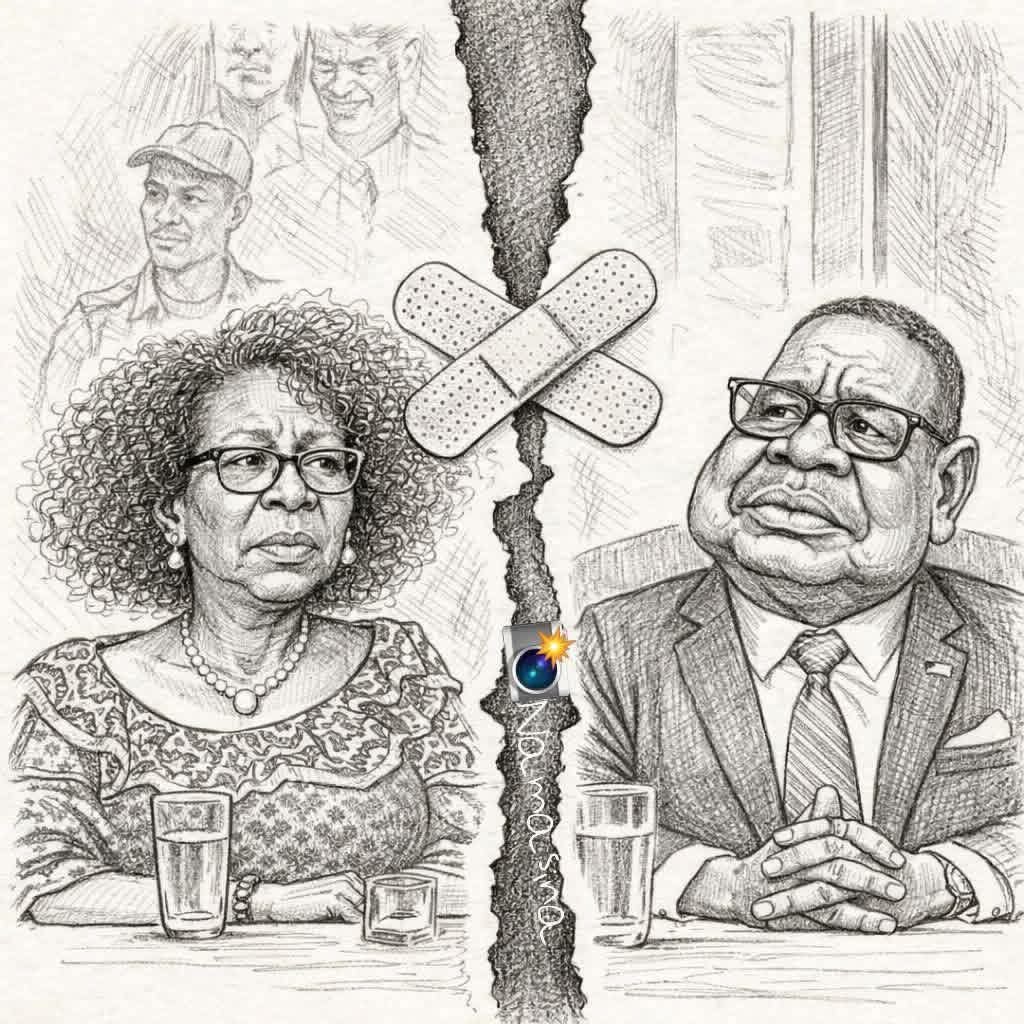
Malawi’s vice presidency is no longer just a constitutional office—it is a political minefield. For decades, the position has followed a disturbing script: promise at the start, suspicion in the middle, and fallout at the end. One by one, vice presidents have walked into office with legitimacy, only to find themselves boxed in, undermined, or outright pushed aside.
Justin Malewezi served quietly, yet still found himself gradually edged out of real influence. Cassim Chilumpha’s tenure spiraled into legal and political turmoil that exposed deep fractures at the heart of government. Joyce Banda was not just sidelined—she was politically isolated, only to later rise to power in extraordinary and unexpected circumstances.
And then came Saulos Klaus Chilima—arguably the most politically assertive of them all—whose fallout with the presidency evolved into open confrontation. Different personalities. Different eras.
Read Full Article on Nyasa Times
[paywall]
Same ending. The easy answer has always been to blame the vice presidents themselves—to label them as ambitious, impatient, or power-hungry. But that explanation is wearing thin.
It is too convenient. Too shallow. Because the truth is harder—and more uncomfortable.
Malawi’s political system quietly breeds conflict between the president and the vice president. It creates two centres of power without clearly defining how they should coexist. The vice president is elected on the same ticket, carries national legitimacy, and yet often operates without a clearly protected role.
That ambiguity is dangerous. Presidents begin to see their deputies not as partners, but as potential rivals. Vice presidents, in turn, feel suffocated—stripped of meaningful responsibility, yet expected to remain loyal and silent.
The result is a slow-burning tension that almost always explodes. What should be a functional partnership turns into a political standoff. Government focus shifts from national development to internal survival.
Energy is wasted on managing egos, suppressing influence, and navigating factional battles. The vice presidency, instead of strengthening governance, becomes a pressure point. And here is the real danger: this cycle is no longer an exception—it is becoming the norm.
If every vice president ends up clashing with the presidency, then the problem is no longer about individuals. It is structural. It is systemic.
It is embedded in how power is designed and exercised. Because until that happens, every new vice president will walk into the same trap—celebrated on day one, distrusted by year two, and politically wounded by the end.
[/paywall]
All Zim News – Bringing you the latest news and updates.
