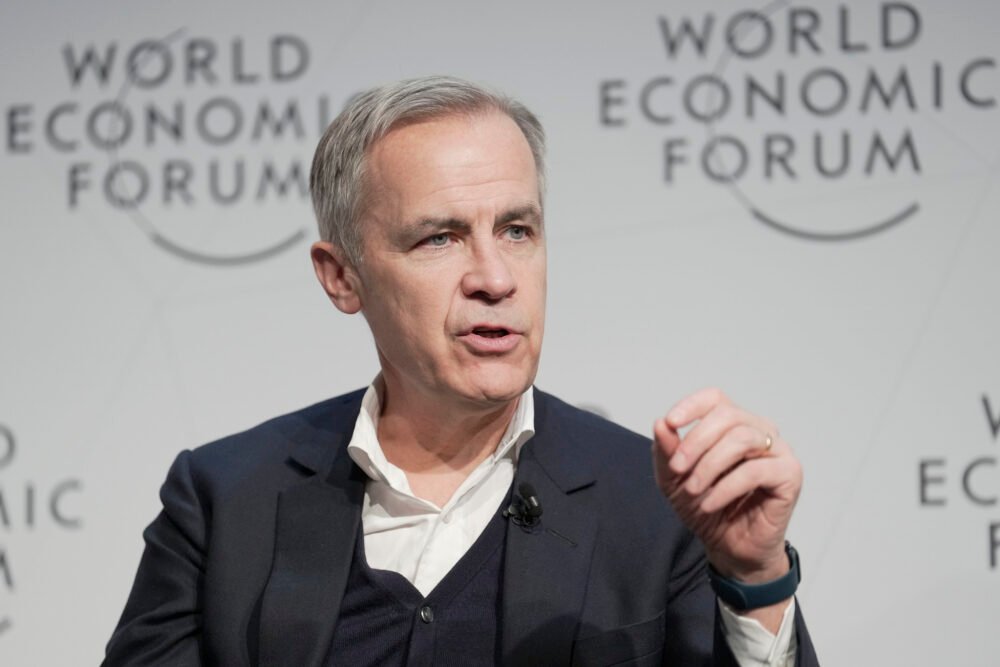
At the World Economic Forum in Davos in 2026, Canada’s Prime Minister, Mark Carney, offered a blunt assessment of global governance, describing what he termed a ‘middle-power revolt’ against ‘performative multilateralism’. He questioned the legitimacy of the so-called ‘rules-based order’, arguing that major powers routinely exempt themselves from global rules, while middle powers comply only when it suits their interests, leaving large parts of the world structurally disadvantaged. Carney warned that economic interdependence has given way to economic nationalism, with tariffs, finance, supply chains and technology increasingly deployed as instruments of coercion.
This shift, he argued, has hollowed out institutions such as the United Nations (UN) and the World Trade Organization, both of which now face existential threats. Canada, he suggested, can no longer rely on the protections it once assumed these systems provided. In response, Ottawa is advancing what Carney calls ‘value-based realism’.
This approach prioritises the strengthening of domestic capabilities—industrial policy, defence, critical minerals management and technological development—while building flexible, interest-driven coalitions. Middle powers, he contends, should not wait for consensus among great powers or comprehensive UN reform before acting. This pragmatic, even pessimistic, assessment contrasts with the outlook of successive UN secretaries-general, who have consistently argued that global challenges demand a reformed, inclusive and modernised multilateral system.
Read Full Article on Mail & Guardian
[paywall]
Ghana’s Kofi Annan championed universal multilateralism through initiatives such asIn Larger Freedom, proposals for UN Security Council reform, and the creation of new bodies such as the Human Rights Council. Resistance by major powers to meaningful UN reform, however, has remained remarkably consistent. In this respect, Carney’s analysis converges with that of Annan, Ban and Guterres: structural barriers continue to block change, particularly because reform of the UN Security Council requires the Permanent Five—the United States, China, Russia, France and Britain—to dilute their own power, an outcome they are unlikely to accept.
Great powers prefer non-binding, flexible arrangements that preserve strategic autonomy. Yet the relative peace, economic growth and stability of the post-1945 era underscore the enduring importance of multilateralism and international law as foundations of collective progress. Abandoning the existing system without implementing credible reforms risks accelerating the decline of international institutions, weakening multilateral cooperation and deepening global inequality.
Developing countries, in particular, face the danger of further marginalisation. Nonetheless, coalitions of middle powers retain the capacity to drive meaningful reform and facilitate constructive negotiation within the UN—provided they resist replicating the major powers’ narrow, self-interested approach to multilateral engagement. The adoption of a ‘Canada model’ carries significant implications for Africa.
The continent cannot depend on the goodwill of major powers or outdated global arrangements to advance its interests. Instead, African states must strengthen resilience through collective action, leveraging platforms such as the African Union (AU), the G20 and the Ezulwini Consensus on UN Security Council reform. The essential first step is recognising the urgency of the moment and accelerating meaningful regional integration.
Viewed through the lens of Carney’s Davos intervention, strategic autonomy should be a central objective for Africa, pursued through regional integration and targeted industrial policy. This includes fully utilising the African Continental Free Trade Area (AfCFTA) and strengthening regional blocs as operational centres, in line with the thinking of scholars such as the late Nigerian technocrat Adebayo Adedeji. Such an approach enables progress without requiring simultaneous consensus among all 54 African states, while remaining aligned with broader continental goals.
It mirrors Carney’s own call to balance self-reliance with cooperative engagement. Africa must also press for substantive reform of the global financial architecture, including improved debt mechanisms, more accessible financing, stronger representation in international tax frameworks and climate-related financial restructuring. These efforts would complement and reinforce initiatives already underway within the UN and other multilateral institutions.
Digital governance represents another critical arena. Strategic partnerships with other middle powers could further strengthen efforts to reform global governance and financing arrangements.
[/paywall]
All Zim News – Bringing you the latest news and updates.
