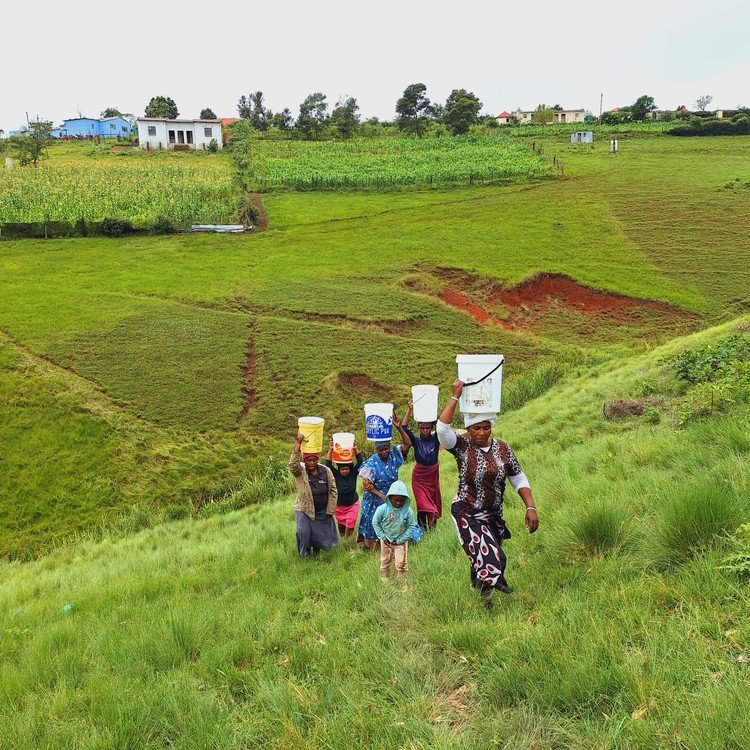
Hundreds of residents from six villages in Sicwenza outside Flagstaff in the Eastern Cape have been without running water for 17 years. Villagers say the problems started in 2009 when a generator for a borehole that supplied the area was removed by municipal officials after it broke down. It was never returned.
They complain that their pleas for the generator to be returned have been ignored for years. When we visited the borehole site, it was filled with water but the generator storeroom was empty and badly vandalised. Doors had been stolen and pipes were broken.
Villages affected include Sicwenza, Mangquzu, Khimbili, Ngqwabeni, Mission and KwaNdayeni. Residents there now rely on collecting water from a nearby river shared with cattle and other animals. Those who can afford to, spend about R1 500 for 2 500 litres of water.
Read Full Article on Mail & Guardian
[paywall]
“We have gone back and forth to the municipality seeking an intervention but nothing has been resolved,” resident Yandisa Mtshoqolwana said. “They are all aware of what’s happening here. Our ward councillor is never available when we need him.
We are sharing dirty water with animals.” The lack of water has made daily life extremely difficult, forcing residents to stop planting their own maize and vegetables, farmer Mphuthani Miya said. “We used to farm on our amasimi (fields) to feed our families, but now we spend our small social grants buying vegetables,” he said. “I’m old and crippled.
I cannot carry containers from the river, so I depend on my grandchildren to fetch me water.” The community’s water supply was meant to come from the Ludiwane Water Treatment Works under the Mzintlava River Scheme, which began in 2024, said ward councillor Bongani Nokhele. But delays with construction had halted the efforts. He added that water would be provided to residents on request, particularly for funerals.
OR Tambo district municipality spokesperson Ncebakazi Kolwane acknowledged that there were “long-standing water supply challenges” in the area. The broader challenge stemmed from historical bulk water infrastructure backlogs, she said. Kolwane said the villages were previously supplied through a spring water scheme from a reservoir that flowed into communal taps. She said the system had been repeatedly vandalised over several years, which ultimately rendered it inoperable.
[/paywall]
