As Africa positions itself as the world’s next major growth frontier, social stability has emerged as a defining determinant of capital allocation. In 2024, foreign direct investment into Africa surged by 75% to a record USD97 billion, representing 6% of global flows. Nevertheless, this momentum is increasingly at risk due to recurring waves of xenophobic violence in key economic hubs — most notably South Africa, the continent’s largest industrialized economy.
The economic cost of this instability is substantial and measurable. South Africa has historically established itself as one of the premier entry point for international investment seeking engagement with Africa. The nation boasts extensive capital markets, resilient financial institutions, and advanced infrastructure that are unmatched by any other sub-Saharan economy in terms of scale.
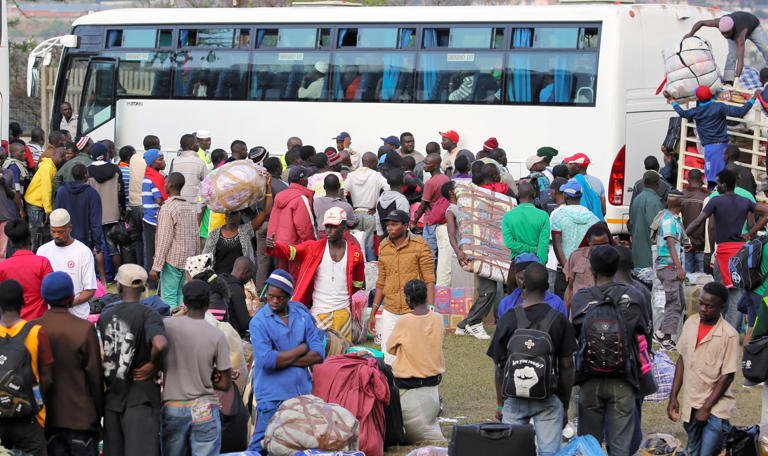
Nonetheless, this economic advantage is progressively compromised by a persistent and detrimental issue: recurrent xenophobic violence targeted at African migrants and their commercial enterprises. can nations, including Malawi, Nigeria, Ghana, and Mozambique, to initiate mass repatriations of their citizens. The South African Border Management Authority reported that more than 13,000 foreign nationals were either voluntarily repatriated or deported in the weeks preceding July 2026.
[paywall]
While public discourse often characterises these incidents as social or political crises fueled by poverty and inequality, the business community has shown remarkable reticence. Corporate leaders are generally prompt in voicing concerns about electricity shortages, logistical bottlenecks, or regulatory uncertainties—issues that directly influence profitability. However, in instances where businesses owned by African migrants are subjected to looting or are compelled to shutter due to targeted violence, the response remains subdued.
This silence constitutes a significant misjudgment. Xenophobia transcends social shortcomings; it represents a systemic business risk that directly affects supply chains, consumer markets, and investor confidence. Migrant Entrepreneurship: A Structural Economic Contribution The narrative driving anti-immigrant sentiment often asserts that foreign nationals intensify South Africa’s deepening unemployment crisis.
However, empirical data presents a markedly different perspective. In the first quarter of 2026, South Africa’s unemployment rate reached 32.7%, with youth unemployment remaining disproportionately elevated. While the frustration among economically marginalised communities is palpable, attributing this structural unemployment to migrant labor neglects established economic facts.
Research indicates that migrant entrepreneurs are net contributors to the South African economy. According to the International Labour Organisation (ILO), immigrant workers have the potential to increase South Africa’s income per capita by as much as 5%. A comprehensive study conducted by the Southern African Migration Programme (SAMP) and the Gauteng City-Region Observatory found that 35% of international migrant enterprises in South Africa employ local citizens; moreover, 42% of non-family employees within these migrant-owned businesses are South African.
[/paywall]
All Zim News – Bringing you the latest news and updates.
