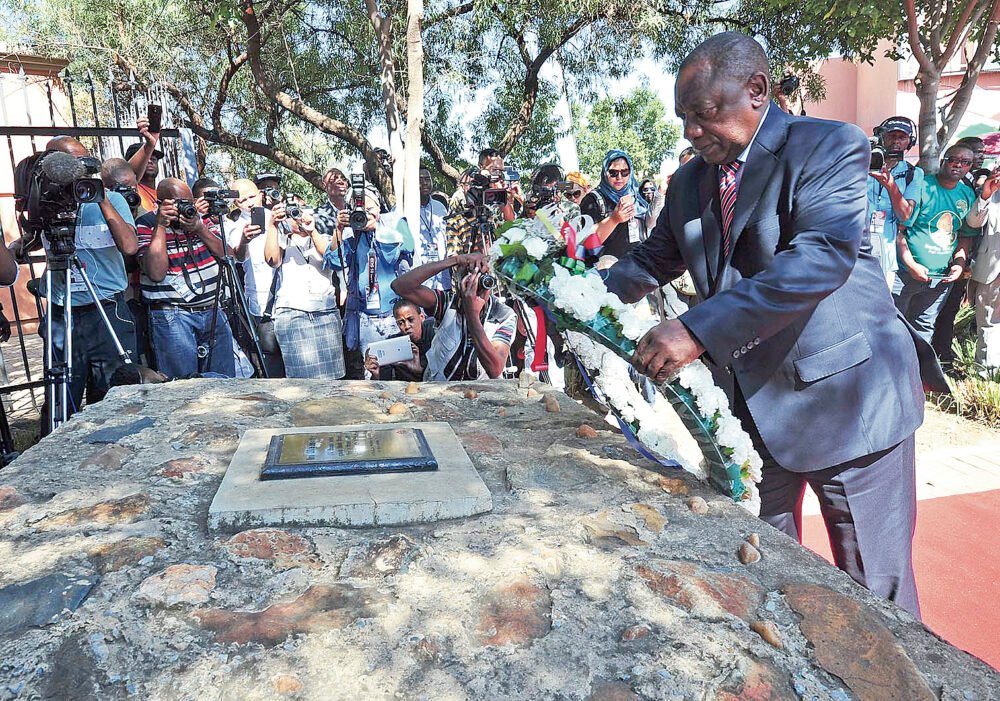
Human Rights Day arrives with a question South Africa can no longer defer. Not whether the country has one of the world’s most progressive constitutions, but whether the rights it promises are being realised in the lives of the people it was meant to serve. Three decades after the adoption of the Bill of Rights, the answer is increasingly contested.
South Africa’s constitutional framework continues to command global respect. Its courts remain assertive and its rights architecture intact. Yet for millions the distance between constitutional promise and daily reality remains wide and, in some cases, widening.
This year’s theme, “The Bill of Rights at 30: Making Human Dignity Real,” reflects that tension. It marks a milestone in the country’s democratic journey while forcing a more difficult question. What does dignity mean in a society where unemployment remains above 30 percent, inequality is among the highest in the world, and access to basic services is uneven and, in some areas, deteriorating?
Read Full Article on Mail & Guardian
[paywall]
Human Rights Day commemorates the events of 21 March 1960, when apartheid police opened fire on a peaceful protest against the pass laws in Sharpeville, killing 69 people and wounding many more. The massacre exposed the violence of the apartheid state and became a turning point in the struggle against racial rule. In democratic South Africa the date was repurposed as a public holiday intended to affirm a constitutional order founded on dignity, equality and freedom.
The Constitution adopted in the mid 1990s entrenched civil liberties and political freedoms while also recognising socioeconomic rights rarely embedded so explicitly in constitutional law. Access to housing, healthcare, education, food, water and social security were written into the country’s founding document alongside protections for equality, freedom of expression and religious belief. It was a framework designed not only to end political exclusion but to redress material deprivation.
Thirty years later South Africa confronts a more complex reality. The legal architecture of rights remains strong. The Constitutional Court continues to defend the principles of the Bill of Rights and oversight institutions remain central to democratic accountability.
Yet constitutional protections alone cannot close the gap between law and lived experience. South Africa remains one of the most unequal societies in the world. Unemployment continues to define the life prospects of millions, particularly young people.
Poverty, spatial inequality and failing public services shape how rights are experienced in practice. For many South Africans the rights guaranteed in the Constitution remain conditional, uneven and, at times, inaccessible. Human Rights Day has therefore become more than a commemoration. It is a measure of how far the democratic project has progressed and where it has stalled.
[/paywall]
All Zim News – Bringing you the latest news and updates.
