Pricier devices, weirder ways of working and an exploitative data economy – all of these await us. Microsoft is betting on efficiency by moving processing power from the cloud to the device in your backpack. John Press, Microsoft Surface business unit head at Core, frames the modern laptop enabled by artificial intelligence (AI) as a three-in-one value proposition.
“It’s an education tool. It’s a business tool. And it’s quite frankly an entertainment tool all wrapped into one,” he says.
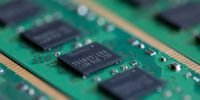
But although Press paints a picture of seamless productivity driven by a device’s neural processing unit (NPU), the reality of 2026 is biting back. For the average South African consumer and chief information officer (CIO), this dependency is arriving at the worst possible time, as the physical hardware required to run these AI tools is entering a crisis of scarcity. A global shortage of memory chips, driven by manufacturers pivoting to build high-margin AI server chips, has sent prices skyrocketing.
Read Full Article on Daily Maverick
[paywall]
In late 2025, consumer solid state drive (SSD) prices rose 50% and RAM prices effectively doubled. “You actually have guys who built gaming PCs this year stripping out and selling their GPUs and DDR5 memory for higher prices than they paid for it months ago,” said a store clerk at Computer Mania, referring to the graphics processing units and latest generation of high-speed computer memory. For CIOs, this is a procurement nightmare, and they can expect a sticker shock of 20% to 30% on the next fleet of laptops.
For the average consumer, the implications are dire too. The dream of the cheap but good smartphone is basically dead. The International Data Corporation estimates that the cost of smart devices will rise by an estimated $70 per unit because of the memory market crunch.
Instead of democratised 5G, 2026 is seeing a return to the 4GB RAM “dumb phone” tier – devices incapable of running the very on-device AI that Press and Microsoft are championing. The digital divide is being reinforced with silicon. Deloitte’s Tech Trends 2026 report adds another layer to this squeeze: “inference economics”.
Although the cost of AI tokens has dropped 280-fold in two years, enterprise usage has exploded so fast that monthly cloud bills are hitting the tens of millions. The corporate survival strategy is to offload processing to “edge AI” – your laptop and phone. But this strategy relies entirely on you owning a device powerful enough to handle the load, precisely when these devices are becoming unaffordable.
But if you can afford the hardware, the office experience is undeniably shifting. McKinsey’s 2025 State of AI report notes that 62% of organisations are now experimenting with AI agents, and 2026 is shaping up to be the era of the “synthetic employee”. Tools such as Microsoft’s Project Opal are designed to autonomously handle the corporate drudgery – employee on-boarding, procurement, invoice processing – with minimal human oversight. This has given rise to a phenomenon known as “vibe working”.
[/paywall]
