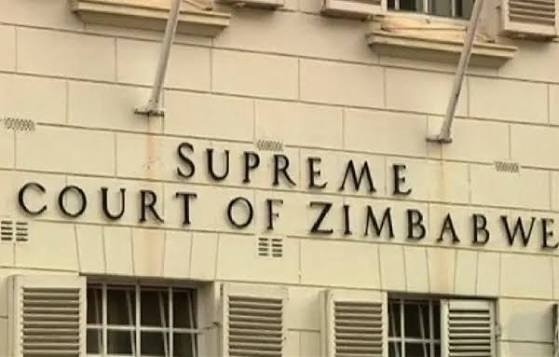
In a landmark ruling that reinforces the sanctity of contract and security of land tenure in Zimbabwe, the Supreme Court has overturned a High Court decision involving former Cabinet Minister Ignatius Morgen Chiminya Chombo.
The case, under Judgment No. SC 08/26, centered on the government’s attempt to cancel Chombo’s 99-year lease for Subdivision 1 of Allan Grange Farm in Zvimba. The legal battle began after the Minister of Lands, Agriculture, Fisheries, Water, and Rural Resettlement issued a cancellation notice in 2021, ostensibly to reallocate a portion of the farm to Chombo’s former wife, Marian Chombo, and other occupants.
The Supreme Court’s intervention serves as a definitive statement on the limits of executive power over agricultural land held under long-term leases.

The core of the dispute rested on the interpretation of two specific clauses within the lease agreement. The government argued it had the authority to repossess the land under Clause 20, which allows for repossession in the interest of public safety, order, or “purposes beneficial to the public.”
However, Chombo’s legal team, led by Professor Lovemore Madhuku, successfully argued that Clause 22.1 provided the only lawful grounds for lease termination, such as breach of contract or non-payment of rent. Justice Musakwa, writing for the bench, found that the High Court had grossly misdirected itself by allowing the Minister to use Clause 20 as a “catch-all” power. The court clarified that reallocating land to resolve a private matrimonial dispute between former spouses does not constitute a “public purpose.”
Such an action was deemed an irrational exercise of power that ignored the specific termination procedures agreed upon by both parties.
Furthermore, the court highlighted the significance of a tripartite agreement Chombo had entered into in 2018 with the government and a private investor, Pepary Investments.

This agreement, designed to facilitate long-term investment with a 20-year horizon, was seen by the court as an irrevocable waiver of the government’s right to arbitrarily cancel the lease. The court noted that Section 17 of the Land Commission Act mandates the state to guarantee security of tenure to promote agricultural development.
By attempting to cancel the lease mid-way through a multi-year investment project, the Minister not only breached the contract but also undermined the national policy of land-based investment protection.
The justices emphasized the doctrine of pacta sunt servanda—that agreements must be kept—noting that the state must be held to the same contractual standards as private citizens.
Ultimately, the Supreme Court declared the cancellation illegal, null, and void. The ruling restored Chombo’s full rights to the 3,098-hectare farm and barred the government from subdividing or canceling the lease for at least 20 years from the date of the tripartite agreement.
The judgment also addressed the “privity of contract,” noting that Marian Chombo, as a third party to the lease, could not use executive intervention to bypass pending judicial determinations regarding matrimonial property.
This decision provides a critical precedent for thousands of other 99-year leaseholders in Zimbabwe, signaling that the court will not tolerate executive overreach that threatens the stability of the country’s agricultural sector or ignores the clear text of legal agreements.
Read Full Article on Africa Hotspot
