Mwapata Institute says Malawi’s social support system delivers strongest results when households access multiple programmes simultaneously, but many beneficiaries continue to exit support abruptly, exposing persistent weaknesses in implementation and financing. In the study titled ‘Does accessing multiple social support programmes improve household resilience and food security?’ Mwapata Institute found that households receiving up to four social support programmes record stronger outcomes than those receiving none or only one form of assistance. Using nationally representative Integrated Household Survey data, the study authored by Anderson Gondwe, Bonface Nankwenya, Dinah Salonga and Levison Chiwaula shows that households accessing four programmes recorded food consumption scores of nearly 10 points higher than those without support.
It further said participation in multiple programmes was positively associated with resilience across assets, adaptive capacity and social safety nets. Experts say the evidence supports a clear policy conclusion: bundled social support works, but for many households, the lived reality diverges sharply marked by abrupt exits, long payment delays and weak follow-up. Agness Moyo, a former social cash transfer recipient from Mfuti in Salima District, said her support ended without warning.
“We were told we would get help for five years, but after that, nothing. No explanation. No follow-up,” she said.
[paywall]
Since losing the transfers eight months ago, her small business has weakened amid rising costs and two of her children have dropped out of school. “They just added new names and removed us,” she said. Her colleague, Lucy Msinja, who still receives support, said the social cash transfer system is visible, but unreliable.
“Sometimes you wait four or five months. You can’t plan anything. When it comes, I invest in tomatoes and charcoal.
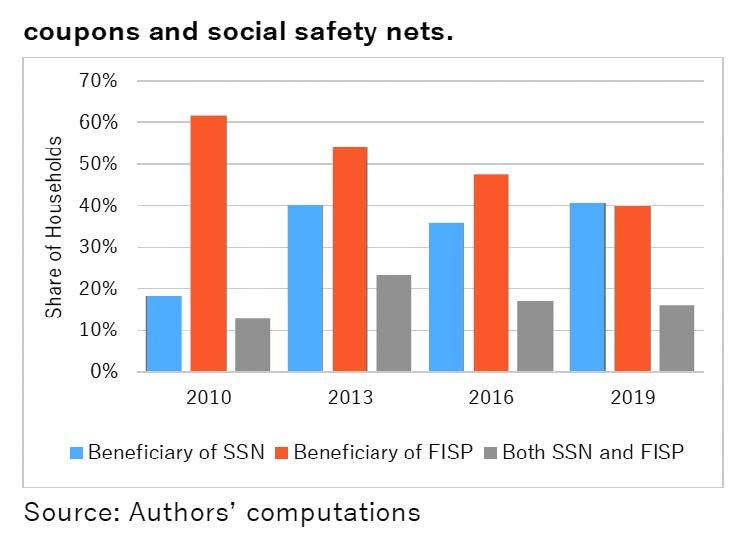
I bought a goat, but the programme is unpredictable,” she said. These experiences reflect the institutional weaknesses identified in the Mwapata Study’s broader analysis. Although Malawi’s social support architecture includes the Social Cash Transfer Programme, Public Works Programme, School Feeding Programme, Village Savings and Loan Groups and Farm Input Subsidy Programme, access remains uneven and weakly coordinated. The study shows that while participation in multiple programmes has remained significant, about 28 percent of households accessed two or more programmes, policy restrictions and budget pressures have reduced coverage, particularly under the Farm Input Subsidy Programme.
[/paywall]
