Source: CITE
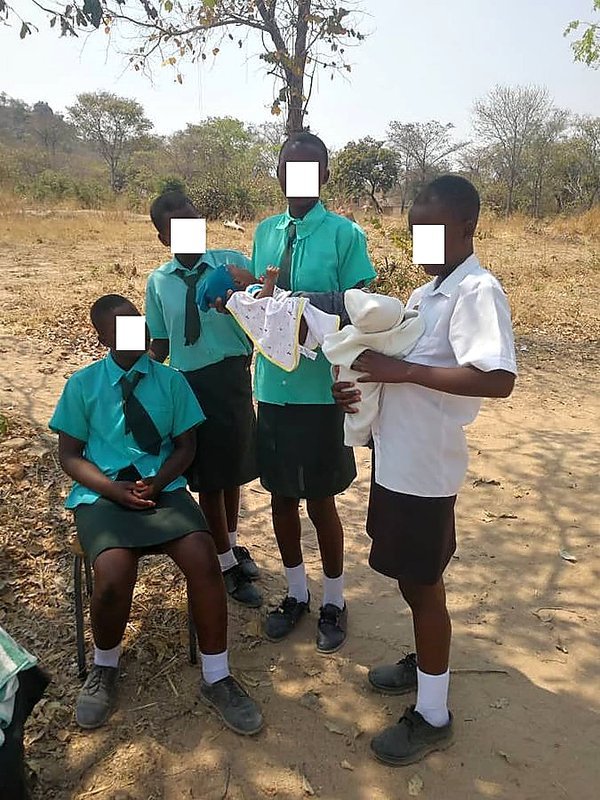
A 17-year-old Form 4 student (seated) from Uzumba takes her newborn twins to school after giving birth in August. The teen mother, now depends on classmates for support. (Pic: Fagio Marowa).
Across Zimbabwe, early pregnancies continue to derail girls’ futures despite years of policy reform. Now, a community-driven campaign is redefining how villages protect their daughters.
*Sithulisile Dube (19), from Filabusi in Matabeleland South, did not write her Ordinary Level (O’ Level) examinations three years ago. She became pregnant at the beginning of the year and dropped out of school.
Although Zimbabwe’s laws have been relaxed to allow teenage mothers back in school, she has not returned.
“I know I could be living a better life if I had finished school and had progressed even to university but the stigma is a lot for a teenage mother,” she said. “I could not bear the pain of being ill-treated by other students at school and decided to stay at home. I could not even go to church because I was afraid that people would say I brought shame to my Catholic family.”.
Left – Sithulisile Dube (19) from Filabusi shopping for diapers in the Insiza district town.
Her story mirrors that of countless other girls who, despite growing awareness about teenage pregnancy, find themselves leaving school and trading the dream of an education for the realities of early motherhood.
Sithulisile said, on reflection, she got pregnant because of a lack of knowledge on preventing pregnancy.
“I became sexually active at a young age, at 15,” she said. “I was impregnated by a 19-year-old. I did not know about safe sex and was sleeping without condoms.”.
Signs off the main road leading to Filabusi town point to various places in the town including the district offices.
Another teenage mother, Roselyn Moyo (17) also from Filabusi said when she weans off her baby this year, she hopes to return to school next year. Roselyn is not afraid of any stigma attached to teenage motherhood because she said will continue with her studies in a school in another province.
“I will leave my child with my mother and will go to Tsholotsho in Matabeleland North to stay with relatives,” she said. It is important that I finish my schooling, get my O’Levels and try to go to college. I was not a bad student at all.”.
O’Levels are the first public examination that any Zimbabwean child sits for and the certificate is the basis of all qualifications in the country. For many girls in Zimbabwe, pregnancy does not just interrupt school, it ends the dream of sitting for final exams, shutting them out of the formal job market and the promise of economic independence.
Teenage pregnancy in Zimbabwe: A growing problem.
Data from the United Nations Population Fund (UNFPA) paints a worrying picture as teenage pregnancies in Zimbabwe have nearly doubled in just seven years, rising from nine percent in 2016 to 22 percent by 2023.
