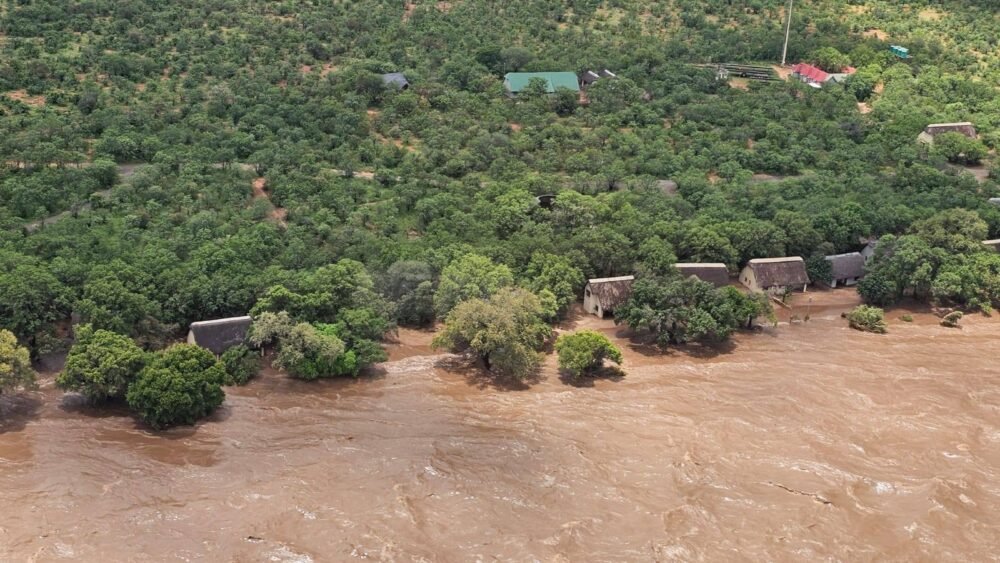
South Africa is experiencing a “summer of extremes”, asdevastating floodsin Limpopo and Mpumalanga,widespread wildfires in the Western and Eastern Capeandgrowing water shortages along the Garden Routeconverge to highlight the accelerating impacts ofclimate change. New data released by theCopernicus Climate Change Serviceand theWorld Meteorological Organisation (WMO)confirmed that global temperatures have already warmed by about 1.4°C above pre-industrial levels. “What this means is that we are no longer approaching dangerous warming globally; we are already seeing these impacts,” warnedWWF South Africa, pointing to South Africa’s current summer as a stark example.
In the Western Cape, prolonged hot, dry and windy conditions have driven a wave ofwildfiresthat have burned more than 100 000ha, leavingfarmers counting lossesand prompting calls for a provincial state of disaster.. In Limpopo and Mpumalanga, an extended tropical weather system — fuelled by unusually warm waters in the Mozambique Channel — unleashed torrential rainfall and severe flooding that killed 37 people and has been declared a national disaster. Roads were destroyed, homes washed away and families displaced while schooling was disrupted across wide areas.
Tourism hubs linked to the Kruger National Park and surrounding gateway towns were also severely affected. Meanwhile, along the Garden Route, Knysna and other coastal towns are grappling with water supply challenges, while early warnings suggest the City of. Cape Townmay once again face water stress.
Read Full Article on Mail & Guardian
[paywall]
Knysna’s severe water supply crisis stems from a protracted dry season and low rainfall, combined with high seasonal demand and long-standing infrastructure problems. Its main reservoir, the Akkerkloof Dam is standing at only15% capacity, with only about 10 days of water remaining in bulk supply infrastructure. WWF South Africa thatclimate scientists have long cautionedthat South Africa would increasingly experience these weather patterns and impacts.
“The years 2020 to 2030 were meant to be the critical decade of action to bring runaway climate change under control and yet we are already in 2026 without having achieved any of the interim targets set by the Paris agreement,” said its senior climate specialistJames Reeler. In the South African context, these events carry very heavy economic and human costs,” he said. Reeler warned that too often, public debate centres on the cost of climate mitigation – reducing climate change — while ignoring the far higher price of inaction.
[/paywall]
