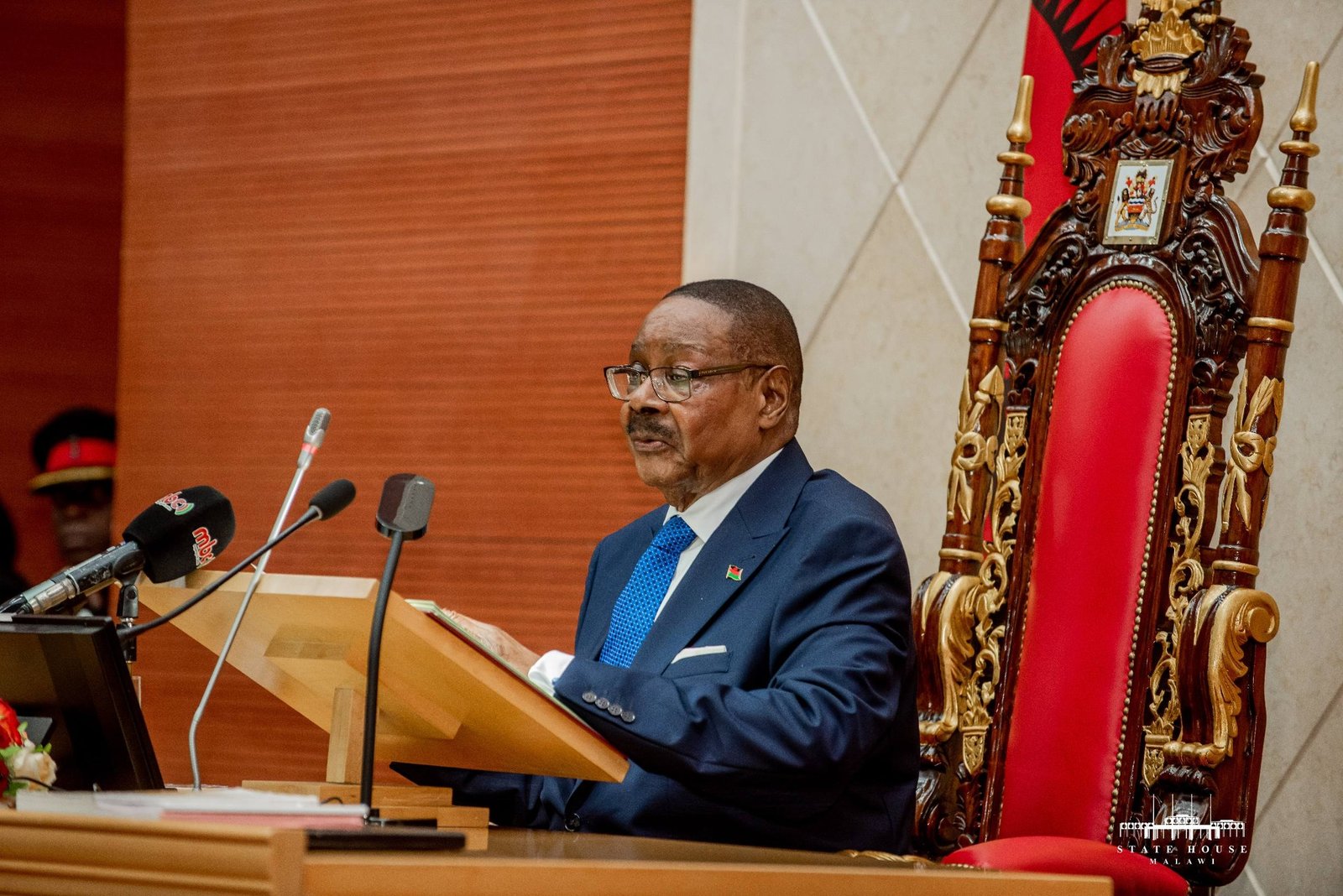
When Peter Mutharika delivered the State of the Nation Address (SONA) earlier this year, he painted a picture of a country on the brink of economic recovery — promising a shift from crisis management to bold structural reforms that would revive Malawi’s struggling economy. But weeks later, the national budget presented by Finance Minister Joseph Mwanamvekha has exposed a stark contradiction between the optimism of the SONA and the brutal reality of Malawi’s fiscal situation. At the centre of the contradiction is the country’s ballooning debt.
Malawi’s public debt has now reached K23.9 trillion, equivalent to 90.9 percent of Gross Domestic Product (GDP) — a level economists warn is dangerously high. Even more alarming, the government is expected to spend K2.793 trillion this year on interest payments alone, meaning a massive portion of public funds will go toward servicing old loans rather than funding development. The figures raise a troubling question: Can Malawi realistically achieve the economic transformation promised in the SONA when the country is already buried under debt?
In his SONA, Mutharika projected an improving economy, forecasting economic growth rising from 2.7 percent to 3.8 percent in 2026, and further to 4.9 percent in 2027. Inflation, he said, would fall from 28.7 percent to below 21 percent, suggesting that the worst of the economic crisis was behind the country. However, the national budget tells a more sobering story.
Read Full Article on Nyasa Times
[paywall]
While the government aims to narrow the fiscal deficit from 11.9 percent to nine percent of GDP, analysts argue that this reduction is far too small to stabilise Malawi’s growing debt burden. Even more worrying is that nearly 79 percent of government revenue is already locked into statutory obligations — including public sector wages and debt repayments. This leaves very little room for new investments or the ambitious reforms outlined in the SONA.
In simple terms, most government income is already committed before development spending even begins. Some economic leaders have cautiously welcomed the budget. Phillip Madinga, chief executive officer of Standard Bank Malawi and president of the Bankers Association of Malawi, praised the government for attempting to restore fiscal discipline.
He said the budget signals a commitment to economic stability and suggested that prudent financial management could help Malawi overcome its economic challenges. Scotland-based Malawian economist Velli Nyirongo argues that reducing the deficit to nine percent will not be enough to stabilise debt levels that are already approaching the size of the entire economy.
[/paywall]
All Zim News – Bringing you the latest news and updates.
