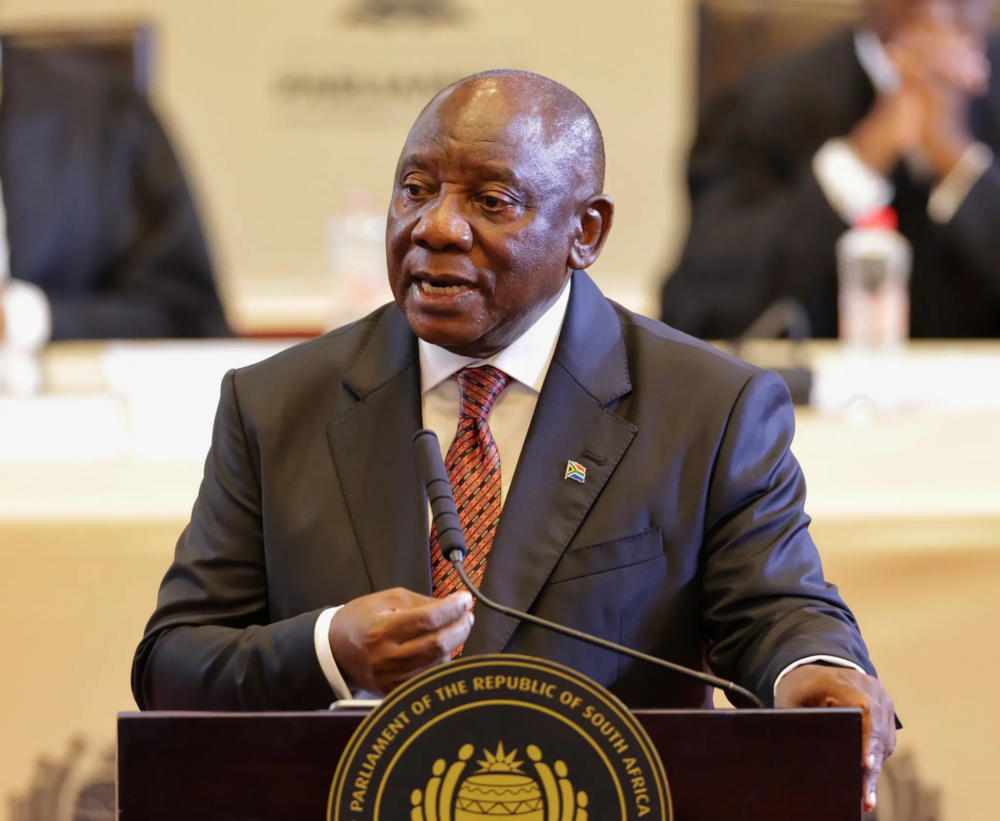
South Africa enters 2026 burdened by deepening crises — collapsing infrastructure, rising hunger, chronic unemployment and a political class insulated from the realities of ordinary citizens. Yet President Cyril Ramaphosa’s eighth State of the Nation address (Sona) unfolded with familiar ceremony: the trademark smile, the polished delivery and the carefully curated optimism. For millions of weary citizens, anxious about the country’s direction as it approaches 32 years of democracy, Sona has become a ritual of promises rather than a moment of reckoning.
Parliament sits in temporary chambers after years of fire damage, division and bruising debates. The original home of democracy is expected to reopen in time for Ramaphosa’s swansong before he retreats into the sunset — and into the long shadow of Phala Phala, a symbol of controversy and political fracture. The president’s opening cadence signalled a shift from ceremonial ritual to sober stocktaking, echoing his earlier promise of candour, honesty and humility.
This was not a night for flourish or political theatre; it was a moment to confront the country’s anxieties with clarity and purpose. Yet beneath the gravity, there was a flicker of hope. The president’s presence carried the promise that progress could be consolidated, that reforms in energy, home affairs and economic recovery might form the scaffolding for a more stable future.
Read Full Article on Mail & Guardian
[paywall]
But the room and the nation waited for something more. They wanted proof of momentum, evidence of execution and a plan that could withstand the country’s toughest realities. Ramaphosa, the former trade-unionist-turned-billionaire, has served two terms since 2018.
His latest Sona arrived amid speculation that his heir apparent could be industrialist and football magnate Patrice Motsepe. But the real question lingered: Was Sona 2026 a moment of genuine strategic direction or another choreographed performance? Despite its drift into spectacle, Sona remains a crucial declaration of intent.
It signals to 64 million citizens, investors and institutions what the government aims to prioritise. But Sona is only the overture; the budget — to be delivered by Finance Minister Enoch Godongwana on 25 February — determines whether the intentions can be funded. Before the address, Ramaphosa visited Khayelitsha for a youth roundtable with the National Youth Development Agency — a symbolic nod to the country’s most urgent crisis: youth unemployment.
Nearly half of South Africans aged 15 to 34 remain jobless, with millions more locked out of education and training. While the president spoke of progress, many South Africans waited for him to acknowledge the line that defines their daily struggle — citizens continue to face dry taps, contaminated water and collapsing infrastructure. Farmers are sounding the alarm over the spread of foot-and-mouth disease, threatening the nation’s milk supply.
Johannesburg, the City of Gold, is buckling under a water emergency that residents describe as a human rights and economic catastrophe. Load-shedding continues. Democracy, they say, dies in darkness — and South Africa has been drifting in and out of the darkness for years. What should be a solemn moment of constitutional accountability has morphed into a red-carpet parade.
[/paywall]
All Zim News – Bringing you the latest news and updates.
