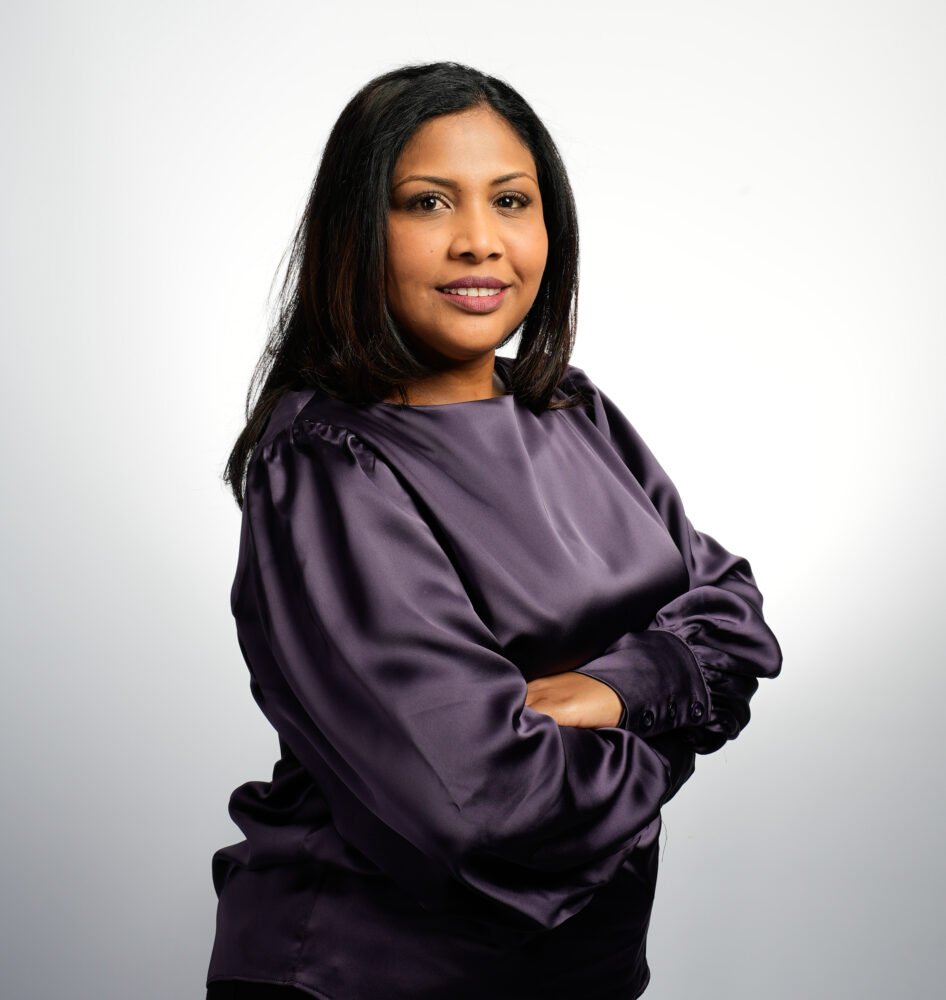
Technical expertise might get you the job — but it’s emotional intelligence, clear communication and the ability to connect that will keep you there and move you forward. According to Melini Moses, communications strategist and founder of Express Yourself, soft skills are now leadership essentials. “They’re not separate from strategy — they are strategy.” With a background in journalism, Moses brings a unique lens to leadership development.
“I’ve lectured in business communications and this reinforced that stories are how we move people, shift perceptions and, ultimately, build trust. You can have an MBA or a PhD — but if you can’t work in a team, resolve conflict or rally people around a shared goal, you’re going to hit a ceiling.” She notes that the perception of soft skills has undergone a marked transformation in recent years. Once considered secondary to technical qualifications, skills such as empathy, communication and emotional resilience have become the cornerstone of effective leadership, especially in the wake of the Covid-19 pandemic.
“When lockdown hit, people were anxious. Some were grieving. Others were juggling work with home-schooling,” Moses recalls.
Read Full Article on Mail & Guardian
[paywall]
“Leaders had to change their approach. Soft skills training shifted towards tone, presence, and creating space for people to be heard. The result?
Improved productivity, because people felt valued.” Business is about people, not just processes, and while the value of these skills is clear, she says not all South African organisations have embraced the shift. “Some are waking up to it, but not nearly enough,” she says. “In a climate of budget cuts and staff shortages, soft skills often fall off the priority list.” But Moses warns this can be short-sighted.
“Misunderstandings, low morale and staff turnover aren’t just HR issues — they’re often communication problems. And they can cost more to fix later than what it would have taken to prevent them in the first place.” During her time as a news editor leading a team of journalists in a fast-paced Johannesburg newsroom, Moses completed a management course that incorporated soft skills such as emotional intelligence, personal mastery and conflict resolution. “That high-pressure environment demanded more than just technical know-how,” she recalls.
“I had to lead with empathy, build trust quickly and navigate conflict.” Her transition from newsroom leader to entrepreneur reinforced those lessons. “Running a business means dealing with uncertainty, managing client expectations and being resilient. I wasn’t formally tested on these — but they’ve shaped my success more than any qualification.” She frequently coaches leaders from highly technical fields such as engineering, mining and finance — sectors where logic, precision and results are prized.
But these environments can struggle with relational communication. “One client, an engineer, was technically brilliant but his team felt overlooked. Through coaching, we worked on storytelling, body language and engagement.
Slowly, his influence grew — and so did team morale and performance.” Communication blind spots often go unnoticed, Moses explains. “Leaders assume a message has landed just because they’ve said it. Or they default to WhatsApp and email, even for emotionally charged conversations. Not everything can be handled digitally — sometimes you need a voice, a presence, and space for real exchange.”
[/paywall]
