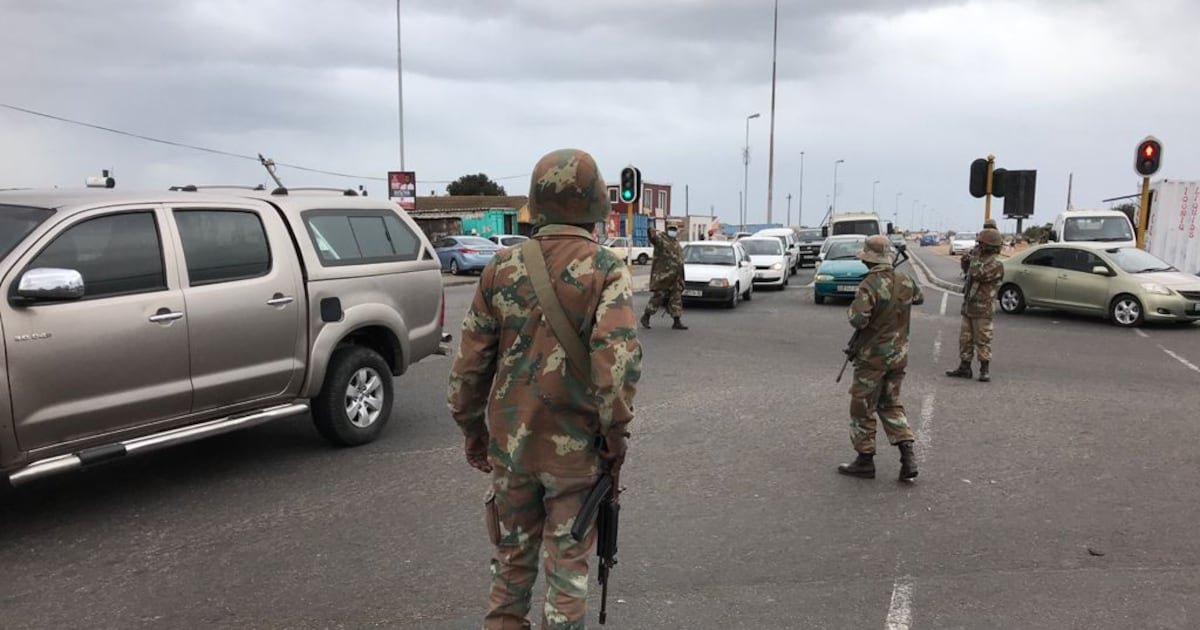
Recent South African history has already proved that President Cyril Ramaphosa’s decision to send the army into crime-infested communities will fail miserably. Deploying the army may gain Ramaphosa the applause of populist and performative politicians like the EFF’s Julius Malema and others, but it will not improve the crime situation in those communities an iota. Instead, Ramaphosa’s decision is very likely to pour fuel on the raging fire that is crime in these townships.
Politically, it is also a risky move. Ramaphosa is sending an army whose chiefs have, over the past year, acted and spoken in defiance of his express orders. Why would you send an ill-disciplined, motor-mouthed, leadership cohort like this into communities and expect them to perform well at an endeavour in which they are not trained or prepared?
The first human being Ramaphosa should have considered before deploying the army was a man called Collins Khosa. On April 10 2020, during the first Covid-19 lockdown period in South Africa, soldiers patrolling in Alexandra township allegedly saw a cup with alcohol in it in Khosa’s yard. Alcohol sales and consumption in public were banned.
Read Full Article on Herald Live
[paywall]
Khosa was in his own yard. When they spotted the cup (how did they know there was alcohol in it?) they ordered Khosa out of his house, poured beer over him, choked him, slammed him against a cement wall and steel gate, and hit him with the butt of a machine gun. He died later that evening from his injuries.
An internal SANDF board of inquiry initially cleared the soldiers of liability. Khosa’s case is just one example that illustrates that soldiers should not be deployed in communities without proper aforethought. They are not trained for law enforcement.
They are not trained for investigation. They should be on the borders, protecting South Africa’s sovereignty. The main causes of crime in South Africa are lack of consequences for wrong-doing, endemic poverty, stubborn unemployment, lack of decent housing and other social issues in these communities.
Deal with these. Add a strong, well-resourced and effective police service and you will deal with crime effectively. Ramaphosa should have taken the time to revisit the year 2019 as well when he took the decision to deploy the SANDF to townships.
In July that year the government deployed 1,300 soldiers in the Western Cape in a campaign named Operation Prosper. They were deployed in 10 areas in the Cape Flats at a cost of R23.3m. At the time of the deployment the then South African Army chief, Lindile Yam, told a press conference that crime-fighting is the role of the South African Police Service and “we wouldn’t like necessarily to be involved in this environment.
It’s not what we’re trained for.” Yam was right. Not a single crime analyst since then has pointed to any successes from Operation Prosper. Indeed, we are here now — with far worse crime and gang violence — because no structural change was implemented in 2019.
We hid the wound under fancy swabs of white bandage but did not treat it. Instead of calling in the army, the government should clean up (as the ongoing Madlanga commission shows we should) the SAPS, strengthen police operations at crime intelligence and other levels, improve prosecutorial performance. Fix the criminal justice system.
Root out corruption. Calling in the military satisfies those who like posturing, but photo opportunities will not sort out the capacity problems in the SAPS.
[/paywall]
All Zim News – Bringing you the latest news and updates.
