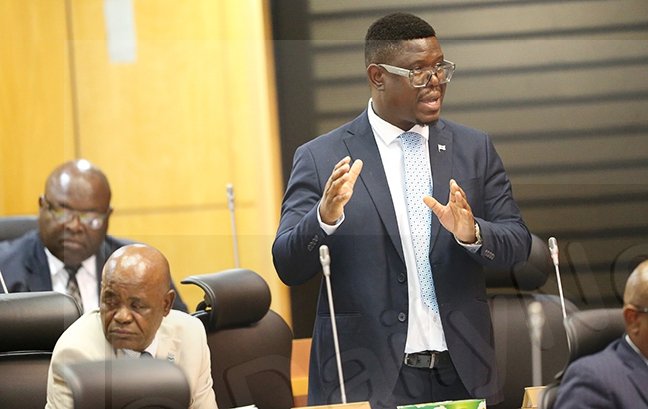
Member of Parliament for Tlokweng, Mr Phenyo Segokgo, says criticism regarding the 2026/27 budget deficit is largely misplaced, attributing the shortfall to costs associated with nationwide budget proposal submissions. Debating the 2026/27 budget on Monday, Mr Segokgo said budget deficits had become standard in contemporary economics since the 2007 financial crisis. He argued that because major global economies were reeling from similar shocks, the deficit should not be viewed as a failure by the Umbrella for Democratic Change (UDC)-led government.
“This deficit works for all of us to have at least a small share of the pie,” he said. He further suggested that when an economy was in technical recession, it was vital for government to implement robust fiscal and monetary policies. Regarding taxation, he called for the introduction of broad automotive indexing to help track the deflationary and inflationary factors that determine tax rates.
He also proposed establishing employment bureaus across all constituencies to provide a structured way to absorb graduates and unemployed youth as part of a social safety net. “This will be an important move as we ramp up toward the goal of 500,000 jobs by 2030,” he added. MP for Tswapong South, Dr Kesitegile Gobotswang, noted positive aspects of the budget, particularly the shift away from the historical over-reliance on supplementary budgets.
Read Full Article on Daily News Botswana
[paywall]
Dr Gobotswang said supplementary budgets were previously used to ‘blackmail’ Parliament, as they were difficult to reject. He also welcomed the P1.853 billion allocated toward rehabilitating and preserving government assets, including schools, health facilities and roads, though he expressed a desire for a more detailed breakdown of such allocations. “I am hopeful that roads in my constituency, such as Pilikwe-Maape and Ramokgonami-Mokobeng, will be included,” he said.
Furthermore, he suggested that the road levy fund should be restricted to ensure funds were used precisely for road infrastructure. He also called for transparency regarding savings made from reduced official travel and praised the investment in solar energy. On accountability, Dr Gobotswang called for strict audits of the Directorate of Intelligence and Security (DIS), which he described as porous.
[/paywall]
All Zim News – Bringing you the latest news and updates.
