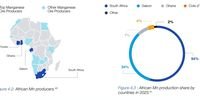
Transalloys has circulated section 189 letters to staff stating that 600 jobs are at risk if the smelter cannot get better deals on electricity supply. More than a third of all the manganese supply in 2025 wasmined in South Africa. And even though production almost doubled that of the next biggest supplier, and the Kalahari Manganese Field is the largest land-based deposit of manganese ore on the planet, the local industry is in trouble.
Transalloys, the country’s last remaining manganese smelter, is the poster child for the crisis and issued Section 189 notices over the festive period, placing around 600 direct jobs at risk. Company CEO Konstantin Sadovnik released a statement shared with Daily Maverick, describing the retrenchments as a financial necessity driven by energy tariffs that have rendered local beneficiation uncompetitive. According to Sadovnik, the business can “no longer sustain operations under current conditions”, with this lack of clarity on input costs leaving them no other choice but to restructure.
Electricity is the single biggest cost driver for smelting, and local producers are currently paying upwards of R2.06/kWh. “We pay more than twice as much for electricity [as] our global competitors,” Sadovnik said, adding that at current pricing levels, competing internationally has “simply become impossible”. The result is a collapse in capacity.
Read Full Article on Daily Maverick
[paywall]
Transalloys has been forced to run only two of its five furnaces, while Chinese processing capacity thrives on cheaper, consistent power. There’s a bitterness in his words that seems compounded by a sense of policy exclusion. While manganese smelters face the abyss, the government and Eskom have actively intervened to throw a lifeline to the adjacent ferrochrome sector.
Earlier in December,Eskom finalised a memorandum of understandingwith ferrochrome giants, including the Glencore-Merafe Chrome Venture. This intervention includes waivers on crippling take-or-pay penalties and interim tariff adjustments currently being processed by the national energy regulator. In exchange, ferrochrome producers have paused their own retrenchments and committed to bringing furnace capacity back online.
[/paywall]
