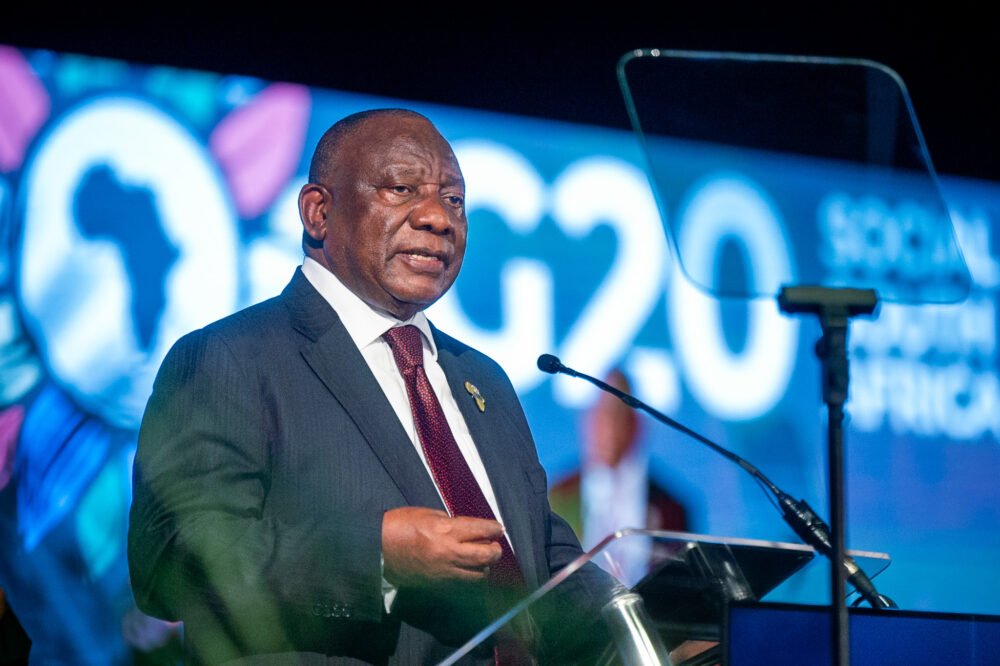
PresidentCyril Ramaphosa’s 2025 has unfolded as one of the most politically complex years of his presidency, defined by high-stakes diplomacy abroad and intensifying pressures at home. From hosting a historic G20 summit to navigating disputes inside the Government of National Unity (GNU), Ramaphosa has spent much of the year asserting his authority in the face of growing challenges. South Africa made history in November by hosting theG20 Summit, the first time the gathering was held on African soil.
Ramaphosa used the platform to position the continent at the centre of global economic debate, placing debt sustainability, climate adaptation, energy transitions and inclusive growth high on the agenda. Despite months of preparation, the summit was overshadowed by a boycott from the United States. Ramaphosa, however, dismissed the impact of the boycott, insisting the meeting would continue with full integrity.
In a rare moment of political unity,EFFleaderJulius Malemapublicly praised Ramaphosa’s handling of the summit and his refusal to bow to US pressure during a briefing at the party headquarters last week Thursday. Relations between Pretoria and Washington remained strained throughout the year, particularly after Trump repeated false claims of “white genocide” in South Africa — a narrative amplified by right-wing organisations such asAfriForumandSolidarity. Against this backdrop, Ramaphosa’s visit to the Oval Office in May drew intense global attention. Discussions with Trump focused on trade, agricultural stability, security concerns including farm attacks, and the contentious land reform process.
Read Full Article on Mail & Guardian
