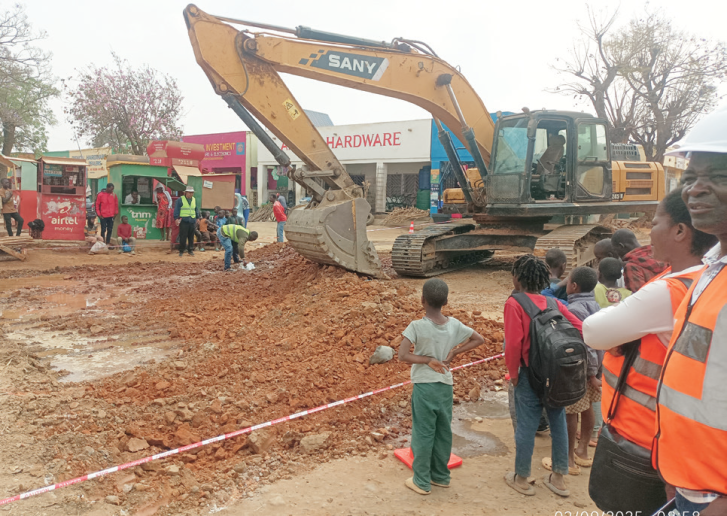
Erratic funding has stalled at least 13 projects the Malawi Government initiated in the 2022/23 fiscal year with a five-year timeframe, but have ended up taking forever. The Nation analysis shows that at the current levels of funding, the projects in question would take 24 years to be completed. Based on the 2026 Public Sector Investment Plan (PSIP) 2026, there was an allocation of K801.02 billion for projects, but to date, only K147.755 representing 18 percent has so far been spent while in the 2026/27 fiscal year, K15.68 billion is budgeted for the same.
Industry players stress that without timely funding, even originally affordable projects become fiscally unsustainable, worsening public debt pressures, as they affect triple-constraints in project management being time, cost and scope. Nine of the projects are cover roads, namely Rumphi-Nyika-Nthalire-Chitipa-Ilomba, Zalewa-Mwanza, Nsipe-Liwonde, Chiringa-Muloza, Dedza Boma Loop, Lirangwe-Chipini-Changalume-Machinga, Mangochi-Makanjira and Mzuzu-Bula-Usisya. “Delay payment affected progress of works and shortage of forex affected the timely importation of bitumen,” reads the PSIP on Nyika road.
The report also mentions lack of qualified key personnel on some contracts, drastic change of scope of works, inadequate capacity of contractors, scarcity of fuel, and sharp increase in costs construction materials. Other projects are the maximum security prison in Lilongwe, revitalisation of industrial workshops in prisons, solar-powered groundwater development project in constituencies and Mzuzu Youth Centre. Construction Industry Regulatory Authority (Cira) spokesperson Lyford Gideon in an interview yesterday said financing delays indicate systemic weaknesses in project preparation and fiscal discipline and negate the principles of good project management, regardless of contractor competence.
[paywall]
He said this leads to prolonged construction periods and deterioration of partially completed works, increased risk of abandonment, contractual disputes, claims, and arbitration and erosion of quality due to cost cutting measures Malawi Building, Civil Engineering and Allied Trade Association vice-president Kondwani Kadango said infrastructure development is a key driver of economic growth, and prolonged project delays slow down productivity, investment, and service delivery. Public finance management specialit Dalitso Kubalasa said the costs will escalate due to inflation, currency depreciation, contract variation orders and essentially, the whole scope will either shrink or become unaffordable. Economist Milward Tobias observed that the number of projects that are planned and started are often too many for a country whose development budget is at the mercy of donors. When queried in Parliament last week on where government will get the money to complete delayed projects, Minister of Transport and Public Infrastructure Jappie Mhangio said some money will be off budget.
[/paywall]
All Zim News – Bringing you the latest news and updates.
