Julius Malema may bring the ANC back to the emancipatory impulse that inspired the liberation movement, but he flatters to deceive precisely at a point when black leadership is in desperate need of revitalisation. Julius Malema’s political career has been through so many turning points, ups and downs, peaks and valleys that he might need medication for motion-sickness. Yet (more seriously), through it all, Malema’s oration, interventions, disruptions, his uncompromising political stances and militancy have not changed.
The man is, at least, consistent. From the moment when he rushed the podium and “pushed aside” elders at an ANC gathering in Durban in 1991, Malema has been “a problem” for the ANC. It was decided, then, that Malema would benefit from political education and training in diplomacy and protocol.
A respected leader of the ANC was given the task, but she failed to see it through… This “problem” did not go away after Malema was expelled from the ANC in 2012. He simply took his voice and vituperation to the streets, formed the Economic Freedom Fighters, and got something akin to a type of “new manager bounce”. The EFF got11.36% of the votein the general election of 2019, and dropped to9.52% of the vote in 2024.
Read Full Article on Daily Maverick
[paywall]
A small but dedicated group of intellectuals who voted for Malema in 2019 recognised that he did not quite live up to the expectations that many South Africans continue to hold dear. See, especially,here,hereandhere. And, since the 2024 general election, the EFF has bled leadership figures with the departure of some of Malema’sclosest comrades,loyalistsandsaamlopers.
And then there was Malema’s association with corruption scandals, notablythe bankrupting of Limpopo(also seehere), which turned more of the early voters away from the EFF. Malema stated thathe would not be prosecutedbecause, he claimed, he was innocent. We should not take his word on that; suffice it to say that if one person tells you it’s raining and another says that it is not raining, it’s probably best to go out and see for yourself whether or not it’s raining.
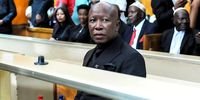
When Malema stood in the dock to face a pre-sentence hearing last Friday — having beenfound guilty of discharging a firearm in public— he seemed as defiant as he has been for most of his adult life and, given the loss of electoral support, the departure of comrades, loyalists and allies, he seemed to be a touch forlorn. He seemed pitiful, unless you’re naturally inclined to schadenfreude or you feel smug. To be clear, he has been found guilty; let’s not be blindly loyal to a criminal.
This does not seem to matter. There is a convicted criminal in the Cabinet, and, well, the Leader of the Freeworld ™ isa convicted felon. When Malema stood in the dock last week, I could not help thinking that he was a man whom time had left behind.
One response to this would be for Malema to catch up with time, but that may require humility, compromise and reimagining a (new) place for himself in the world. It’s not all good. For instance, when Malcolm X left the Nation of Islam and made a pilgrimage to Mecca in 1964, he changed his perspective, moved away from strict black separatism toward a broader,more inclusive philosophyof human rights and racial equality.
That took courage. Another response would be to work with new information. Drawing on the ideas of Alfred Marshall, John Maynard Keynes said, “When the facts change, I change my mind”.
My view of this “change” is that it does nothing to change the underlying, structural and historical conditions that have brought South Africa to its present. Malema did not help matters when he said, last October, that: “As a revolutionary, going to prison or death isa badge of honour.”This performativity presented as martyrdom suggests that if/when he goes to prison, his followers and true believers are on their own, and must continue battling against underlying, structural and historical conditions. Malema’s strength and appeal (to his followers) is Malema himself.
If he is incarcerated, the EFF would probably shrivel up. The times have changed, and, in an important sense, it has not been for the better. Let’s go back to the underlying structural conditions that a Keynesian (and Marshallian) response to “change” glosses over.
Theevilthat established the underlying, structural and historical conditions (which persist) has concealed itself and presented itself as necessarily benevolent — even necessary. There is much evidence from history that demonstrates this power of reinvention. In France, the nobility retained their privileges and prestige after the French Revolution and “returned,” as it were, to influence the future of that country. Closer to our time, after the Second World War, Italian fascists of the inter-war period “rebranded” — or repositioned — themselves as Christian Democrats — slipping in and out of Italian politics and government for the next several decades.
[/paywall]
