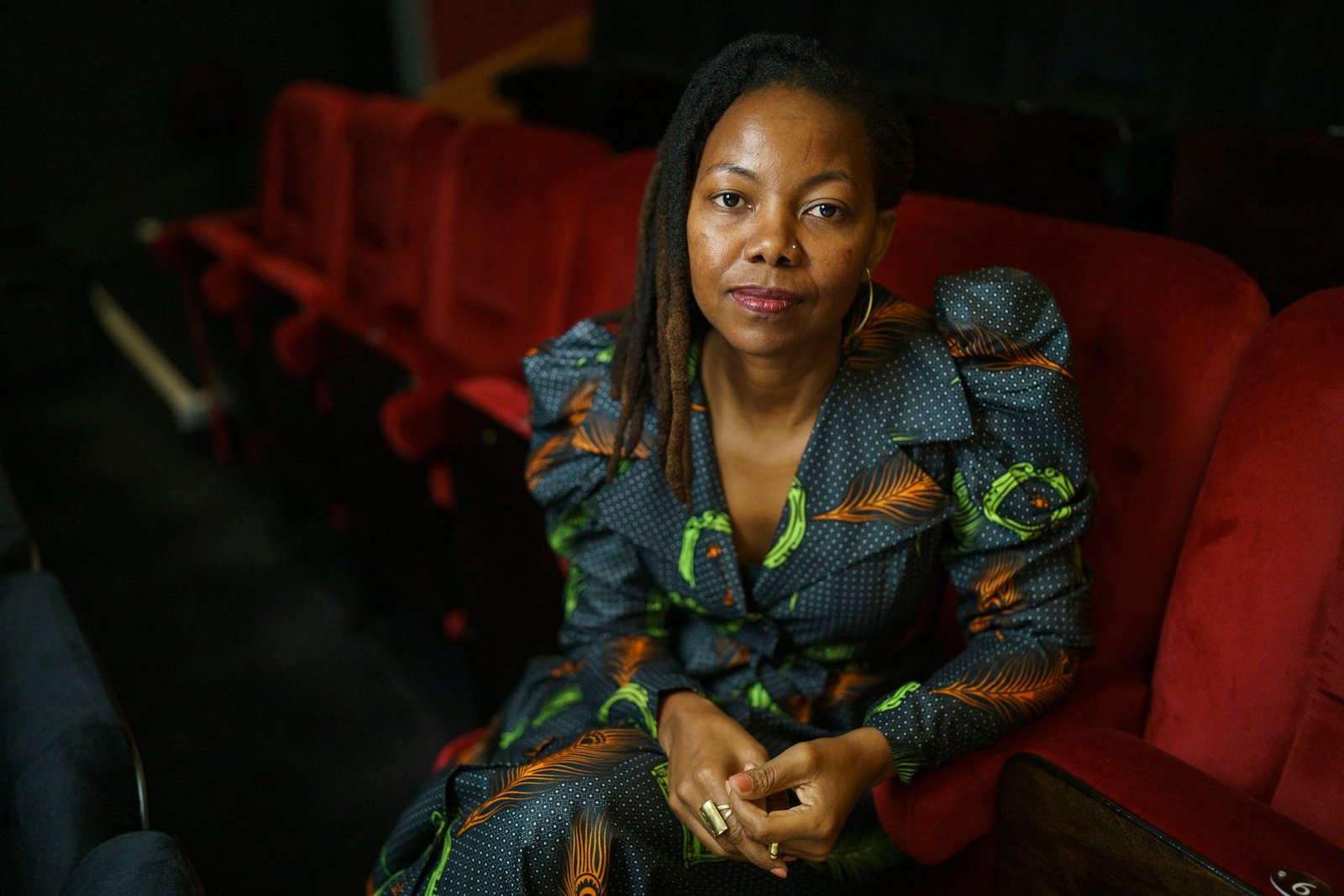
1.10.20253:41by the conversation.comNoViolet Bulawayo wins the best of 25 years of the Caine Prize. Why she deserves itShe experiments with form while capturing the hopes and contradictions of our times.Tinashe Mushakavanhu,Harvard UniversityZimbabwean writerNoViolet Bulawayohas beenhonouredas Africa’s best short story writer after winning theBest of Caine Award. The special recognition marks 25 years of the annualCaine Prize for African Writing.An esteemed panel of judges unanimously selected Bulawayo as the standout winner of the 25 stories awarded the prize so far.
Her short story,Hitting Budapest, won the prize in 2011. She has gone on to publish two acclaimed novels,We Need New NamesandGlory. Both were shortlisted for the Booker Prize.For me as ascholarof African literary cultures, Bulawayo’s recognition by the judges feels like a generational milestone.
Hitting Budapest follows a band of children wandering in a decaying urban landscape in search of food. Their journey, told through a fractured, childlike voice, captures both the immediacy of play and the stark realities of deprivation.The story’s unsettling blend of innocence and brutality provoked livelydebatewhen it appeared. It raised questions about the aesthetics of the African literature the prize sought to celebrate.
Read Full Article on The Zimbabwean
[paywall]
About whether its power lived in its inventive narration and perspective, or whether it leaned too easily into global appetites for African suffering and spectacle.But there was never any doubt about Bulawayo’s singular talent. She’s today known for her virtuoso ability with language and her sharp eye for the textures of African life.The authorNoViolet Bulawayo, the pen name of Elizabeth Tshele, was born in 1981 in Tsholotsho, Zimbabwe. She grew up in the city of Bulawayo, from which she takes part of her literary name.
“NoViolet” is in honour of her late mother, Violet. She later moved to the US, where she studied and began her writing career.In 2013, her debut novel We Need New Names announced her arrival as a major talent. Its sharp social observation, childlike candour, and lyrical experimentation made it both accessible and unsettling.
Her Caine Prize story makes up the first chapter of this book.A decade later,Gloryconfirmed her daring imagination. Set in an allegorical animal kingdom, it transforms Zimbabwe’s turbulent politics into a fable of authoritarianism and resistance. Its inventive form – mixing satire, oral traditions, and digital-age idioms – reimagines how the novel can respond to today’s African realities.Together, these works have marked Bulawayo as a defining voice of her generation.
She isn’t afraid to stretch the form of the African novel while capturing the hopes and contradictions of our times.The prizeSince its inauguration in 2000, theCaine Prize for African Writinghas set itself a lofty goal: to identify and celebrate a new generation of African writers.When the first-ever prize was awarded to acclaimed Sudanese writerLeila Aboulelathat year, it signalled a shift: the new African writers were not just beholden to “writing back” to colonial history, they wrote from the urgency of their own moment.Manypast Caine winnershave gone on to make enduring contributions to African literature.Binyavanga Wainaina,Helon Habila,Yvonne Adhiambo Owuor,Brian Chikwava,Mary Watson, among others. Their work shows how the prize has provided a platform for innovative writing that unsettles conventions and shifts the contours of the field.On average more than 200 entries are received each year, and significantly, more women than men have won the prize. This is notable compared to the heavily male-dominatedAfrican Writers Seriesgeneration of the 1960s.
These included literary powerhouses LikeChinua Achebe,Wole SoyinkaandNgũgĩ wa Thiong’o.Unlike many other prizes, the Caine made a decision early on to accept entries frominternet publications. This proved prescient. Online platforms have inspired a boom in short stories.
The art form has links with age-old traditions of storytelling in Africa and seems particularly suited to the pace of contemporary living.Beyond the award, the Caine Prize has hosted annual writing workshops in various African cities, helping to nurture local literary communities. Its award ceremonies have been accompanied by efforts to ensure the stories remain accessible to African readers.Today, more than a dozen African co-publishers distribute the Caine Prize anthologies. These books include each year’s shortlisted stories and workshop entries.ControversyFor much of its history, the Caine Prize has championed the African short story written in English, by writers based either on the continent or abroad.
This has not been without controversy, especiallydebatesabout who counts as an African writer, and why the prize is based in the UK rather than Africa.If anything, the prize has forced readers to think harder about who belongs to an African literary community, and who gets left out when boundaries are drawn too tightly. The true currency of prizes is recognition, and in this sense the Caine has often exceeded expectations by bringing visibility to writers who might not otherwise have reached global audiences.Controversies endure. The prize’s location in Europe, its emphasis on the short story form, andits rolein shaping global perceptions of African literature all remain points of contention.Even with that noise in the background, the Caine Prize remains the only freestanding and consistent award dedicated solely to African writing.
That distinction alone has made it the preeminent platform for new African voices in the 2000s.Why this mattersBulawayo’s crowning as the best of the lot underscores both the continuity and the evolution of the prize. All the winners embody or react against African political and social contexts, at the same time addressing issues of race, identity, sexuality and historical injustices.The Caine Prize has been an imperfect but vital incentive for a new generation of African writers and their often politically charged perspectives. It has sparked robust discourse, created opportunities, and amplified voices that might have been overlooked.
It has become a cultural institution to be reckoned with and arguably the most influential global event for African literature.And in celebrating NoViolet Bulawayo at its 25-year mark, it affirms what many already knew: she is a generational talent, one whose work will resonate far beyond the prize itself.Tinashe Mushakavanhu, Assistant Professor,Harvard UniversityThis article is republished fromThe Conversationunder a Creative Commons license. Read theoriginal article.Post published in:EntertainmentLeave a ReplyCancel reply 1.10.20253:41by the conversation.comNoViolet Bulawayo wins the best of 25 years of the Caine Prize. Why she deserves itShe experiments with form while capturing the hopes and contradictions of our times.
She experiments with form while capturing the hopes and contradictions of our times. Tinashe Mushakavanhu,Harvard UniversityZimbabwean writerNoViolet Bulawayohas beenhonouredas Africa’s best short story writer after winning theBest of Caine Award. Read theoriginal article.Post published in:Entertainment Zimbabwean writerNoViolet Bulawayohas beenhonouredas Africa’s best short story writer after winning theBest of Caine Award.
Read theoriginal article. Zimbabwean writerNoViolet Bulawayohas beenhonouredas Africa’s best short story writer after winning theBest of Caine Award. The special recognition marks 25 years of the annualCaine Prize for African Writing.
An esteemed panel of judges unanimously selected Bulawayo as the standout winner of the 25 stories awarded the prize so far. Both were shortlisted for the Booker Prize. For me as ascholarof African literary cultures, Bulawayo’s recognition by the judges feels like a generational milestone.
Their journey, told through a fractured, childlike voice, captures both the immediacy of play and the stark realities of deprivation. The story’s unsettling blend of innocence and brutality provoked livelydebatewhen it appeared. About whether its power lived in its inventive narration and perspective, or whether it leaned too easily into global appetites for African suffering and spectacle.
But there was never any doubt about Bulawayo’s singular talent. She’s today known for her virtuoso ability with language and her sharp eye for the textures of African life. NoViolet Bulawayo, the pen name of Elizabeth Tshele, was born in 1981 in Tsholotsho, Zimbabwe. She later moved to the US, where she studied and began her writing career.
[/paywall]
